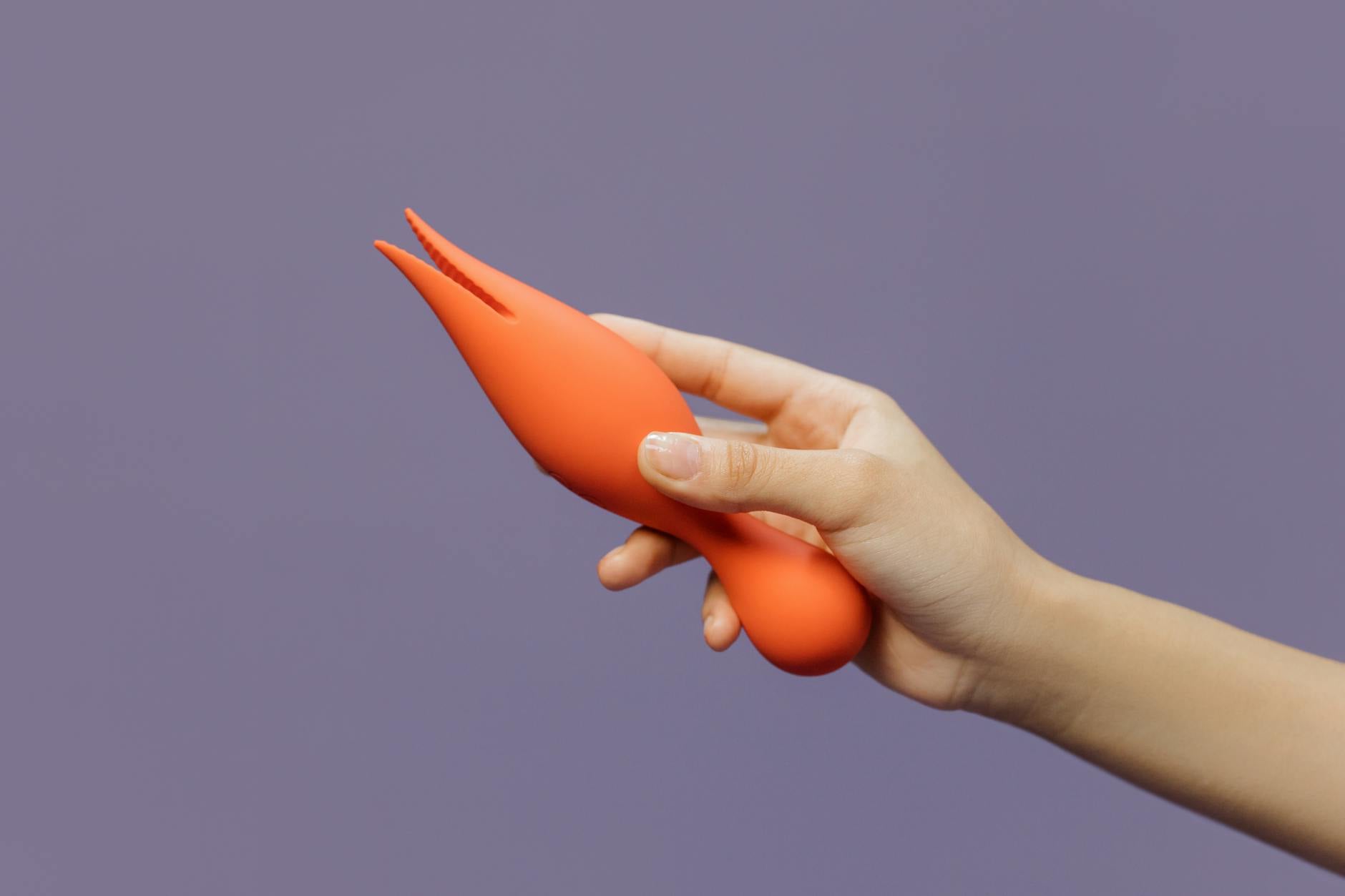
Let's be real about what ED actually changes
Your partner's erectile dysfunction does not mean your pleasure is off the table. It does mean the familiar script has to change. Most couples get stuck here, treating ED like a door that closes on sex entirely instead of a hallway that leads somewhere different.
Here's what actually happens physiologically, and how lemon vibrators fit into it.
The pressure trap and why vibrators break it
Erectile dysfunction creates a feedback loop. Your partner feels anxious about performance. Anxiety makes erections harder to achieve. Harder erections increase anxiety further. Meanwhile, you're in the middle of this, and your pleasure has somehow become secondary to his ability to perform.
Lemon clitoral vibrators interrupt this loop completely. They do something penetrative sex cannot when ED is in the picture. They move the focus away from his erection and directly onto your clitoral pleasure, which is where your orgasms are most reliable anyway.
This is not a consolation prize. This is the actual straightest path to your own satisfaction.
Why partnered sex with ED changes
Two things happen when erectile dysfunction is new. First, penis-in-vagina penetration becomes unpredictable. That uncertainty makes everything feel high-stakes. Second, your partner's attention shifts inward to his body and away from yours. He's managing anxiety, not present with you.
Lemon sexual toys reframe the whole experience. Instead of "we need penetration for this to count," the conversation becomes "let's make sure you have direct clitoral stimulation." That shift does more than improve your orgasm odds. It actually reduces his performance anxiety because the goal is no longer his erection. The goal is your pleasure.
How to introduce a lemon vibrator without making it awkward
Don't start with "we need a vibrator because of your ED." That ties the toy directly to the problem, and nobody wants that.
Instead, frame it around what you want. "I've been curious about using a vibrator during sex. Would you want to try that together?" This moves the story from his body to your pleasure, which is genuinely what's happening.
Start small. Keep the vibrator somewhere accessible, not hidden. Use it during foreplay before any penetration happens. Let him see that you're comfortable with it. Most partners actually feel relieved when a vibrator enters the room, because it takes performance pressure off them.
Where vibration fits in your actual sex life
Lemon clitoral vibrators work in three specific ways when ED is present.
First, use it during foreplay to bring you closer to orgasm before any penetration happens. This removes the pressure for his erection to do everything. You're already aroused and close. He can be present without needing to perform.
Second, use it during penetration if his erection is strong enough for him to want that. The vibration adds sensation for you while reducing the pressure for him to maintain perfect hardness. It shifts what matters from his ability to stay hard to his ability to be close while you reach orgasm.
Third, use it if penetration isn't happening that day. Some days ED is more pronounced. A lemon sucker gives you access to the orgasm you deserve regardless of what his body is doing. This is actually essential. If sex always has to be penetrative to feel complete, ED will destroy both of your pleasure over time.
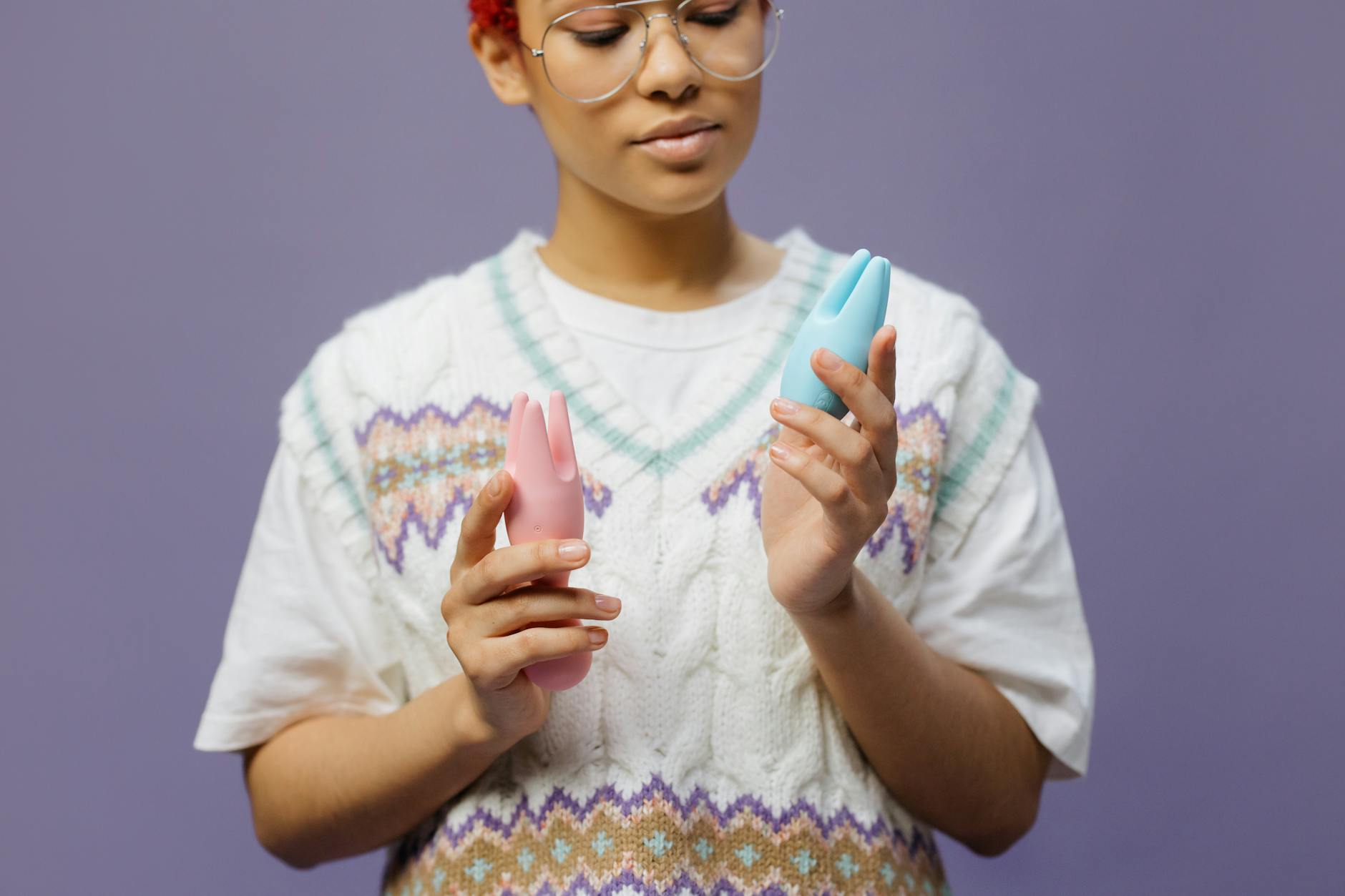
Photo by cottonbro studio on Pexels
The communication part matters more than the toy
Here's what I've seen in my practice. Couples who introduce a vibrator without talking through ED actually make things worse. The vibrator becomes evidence that something is broken instead of a tool that works.
Have a conversation outside the bedroom. Not during sex. Not in a crisis. Just say: "ED is hard on both of us. I want to make sure I'm getting pleasure even when penetration is difficult. Using a vibrator would help me. Would that work for you?" Most partners will say yes because it feels like collaboration instead of blame.
Then during sex, keep talking. "This feels good." "I'm close." "Keep doing that." The vibrator becomes part of the conversation between you, not a substitute for presence.
Why lemon vibrators specifically work better here
Lemon clitoral vibrators use suction and pulsation instead of pure vibration. This means they don't require the same kind of direct friction that wands do. For partners dealing with ED, this matters because you can use a lemon vibrator comfortably even if your partner is inside you.
The sensation is also more targeted to the clitoris, which means your orgasms are more reliable. When ED is in the picture, reliability matters. You need to know that your pleasure doesn't depend on his erection.
A lemon clitoral vibrator also stays put, which means less physical coordination. Your hands are free. His hands are free. You're both actually present instead of managing logistics.
When to see a doctor and when to see a therapist
ED has physical and psychological causes, often both. A GP can rule out cardiovascular issues, diabetes, or medication side effects. That part is necessary.
But the anxiety part is real too, and it doesn't go away just because a doctor prescribes something. If your partner is consistently anxious about his erection even when medication is helping, talking to a therapist is worth it. The vibrator helps you both in the meantime, but anxiety work is separate.
The shift that actually matters
What lemon sexual toys do in relationships with ED is remove sex from being a performance where your partner succeeds or fails and move it toward being an experience you both share. Your orgasm is not dependent on his body working perfectly. His pleasure is not dependent on giving you an orgasm through penetration alone.
You both get to have good sex. Sometimes that sex looks like it used to. Sometimes it looks different. Both can be satisfying.
People also ask
Can you use a lemon vibrator if your partner has ED and is taking Viagra or similar medication?
Completely yes. Medication doesn't make vibration less useful, and vibration doesn't interfere with how the medication works. Some partners find that using a lemon vibrator actually helps because it reduces the pressure to perform perfectly, which can improve erection quality anyway. The toy and the medication are working toward the same goal from different angles.
Will using a lemon vibrator make my partner feel inadequate during sex?
It depends entirely on how you frame it. If you introduce it as "we need this because you can't perform," absolutely it will. If you introduce it as "I want to use this for my pleasure," that's true and it's not about him. The vibrator is not saying he's failing. It's saying your clitoris deserves direct stimulation. Those are two different things.
What if my partner has ED and refuses to let me use a vibrator?
That's a bigger conversation than the vibrator itself. Refusing to let you access your own pleasure because of his anxiety about ED is not really about the toy. It's about control and insecurity. I'd suggest having that conversation with a couples therapist, not alone and not during sex. His feelings are valid. Your pleasure is also valid. Those two things have to fit together somehow.
Can we use a lemon vibrator if he's not able to get or maintain an erection at all on a particular day?
Yes, and honestly, this is one of the best uses for it. Some days ED is more severe. That doesn't mean you don't get an orgasm. A lemon clitoral vibrator gives you access to your pleasure regardless of what's happening with his erection. This is actually one of the most important reasons to have one in the relationship. It decouples your satisfaction from his body's cooperativeness.
Does using a vibrator make ED worse over time?
No. ED is caused by physical or psychological factors, neither of which is worsened by using a vibrator. If anything, reducing performance pressure through vibrator use can improve the psychological side of ED. The problem happens when vibrator use becomes a way to avoid addressing the underlying issue. Using a lemon vibrator and also seeing a doctor is the right combination.
How do I know if the lemon vibrator is actually helping or if we're just avoiding the real problem?
The lemon vibrator is helping if both of you are still getting pleasure. It's avoidance if using it is a replacement for trying other solutions, like medical evaluation or therapy. The toy should be part of your solution, not your only solution. You're both still communicating. You're both still satisfied. That's what working looks like.
The actual takeaway
Erectile dysfunction is hard on relationships, and it's not something vibrators can fix alone. But they can absolutely help both of you keep having satisfying sex while the other parts of treatment happen. Your orgasm is not dependent on his erection. Using a lemon vibrator is how you make sure that stays true.
If you're navigating ED as a couple and want to explore how vibrators fit into your specific situation, reach out. That conversation is worth having.
Sources
Ahern, J., et al. (2022). "Erectile Dysfunction and Partner Distress: A Systematic Review and Meta-Analysis." Journal of Sexual Medicine, 19(5), 812-824.
Baldwin, D. S., & Mayers, A. G. (2019). "Sexual Dysfunction and Antidepressants: Multiple Mechanisms and Clinical Implications." Human Psychopharmacology, 34(3), e2532.
Corty, E. W., & Guardiani, J. M. (2008). "Canadian and American Sex Therapists' Perceptions of Normal and Abnormal Ejaculatory Latencies: How Long Should Intercourse Last?" Journal of Sexual Medicine, 5(5), 1251-1256.
Gottman, J. M., & Levenson, R. W. (1992). "Marital Processes Predictive of Later Dissolution: Behavior, Physiology, and Health." Journal of Personality and Social Psychology, 63(2), 221-233.