
Here's what nobody tells you about slower arousal
Let's be real: arousal used to be faster. Maybe you could get going in five minutes, maybe in ten. Now it takes twenty. Or thirty. Or sometimes you're not sure it's happening at all until you're already halfway through.
That's not dysfunction. That's biology. And it's absolutely workable once you stop treating it like a problem that needs fixing and start treating it like information about what your body needs right now.
The frustration usually comes from one place: the gap between how you used to work and how you work now. You expect the old timeline. Your body's on a new one. Lemon vibrators, especially the air-suction designs, bridge that gap in a really specific way that makes slower arousal actually feel like an advantage instead of a delay.
Why arousal actually slows down
There are about six things that can shift your arousal timeline, and most of them are happening simultaneously. Stress is the biggest culprit. Your nervous system gets stuck in low-grade fight-or-flight mode, and arousal requires the opposite. Your brain has to feel safe enough to shift into parasympathetic activation, which is harder to access when you're running on cortisol.
Hormonal changes come next. If you're on birth control, managing thyroid issues, or navigating perimenopause or menopause, estrogen and testosterone shifts absolutely change how quickly blood flows to your genitals and how sensitive your nerve endings feel. Lower estrogen means tissue changes too. Thinner, more delicate tissue sometimes needs more time to warm up and engorge.
Medications matter. SSRIs, blood pressure drugs, antihistamines, even some diabetes medications slow arousal. It's not you being broken. It's chemistry.
Partner dynamics shift things too. If you're used to initiating with someone who doesn't match your current speed, you can end up in a frustrating loop where you're trying to hurry your own body to meet their timeline.
Age itself is neutral on arousal, but life at thirty-five, forty-five, or fifty-five is completely different. You've got more cognitive load, less uninterrupted time, more things competing for your mental bandwidth. Arousal requires presence. Presence is harder when your brain is running five background processes.
The unexpected advantage of a slower buildup
Here's the part that surprises most people: the longer arousal ramp can actually produce more intense orgasms if you work with it instead of against it. Your body gets more gradually engorged, more time for the clitoral complex to expand, more sustained engorgement of the vaginal tissue and labia. By the time you reach orgasm, there's more vasocongestion, which means stronger contractions.
I've had clients report that their most powerful orgasms came after they stopped trying to speed themselves up and started treating the longer buildup as the real event, not the obstacle.
How lemon vibrators change the math
Lemon clitoral vibrators work differently than most vibrators because the air-suction design stimulates your clitoris without requiring the same kind of direct friction that a traditional vibrator needs. That matters when arousal is slow because your tissue might feel less engorged initially.
With a standard vibrator, you're often waiting for enough blood flow and sensitivity to build before the stimulation feels good. With lemon suckers or similar air-suction devices, the suction itself draws blood into the tissue and triggers nerve endings through a gentler mechanism. You get stimulation and arousal building at the same time, instead of waiting for arousal and then adding stimulation.
Start on the lowest setting. Seriously. I know this sounds basic, but most people crank the setting up when things aren't immediately intense. With slower arousal, the first eight to twelve minutes on pattern one or two is where the magic happens. Your body's gradually engorging, blood's flowing, sensation's building. If you jump to pattern five because you're impatient, you'll actually desensitize the tissue and reset your own buildup.
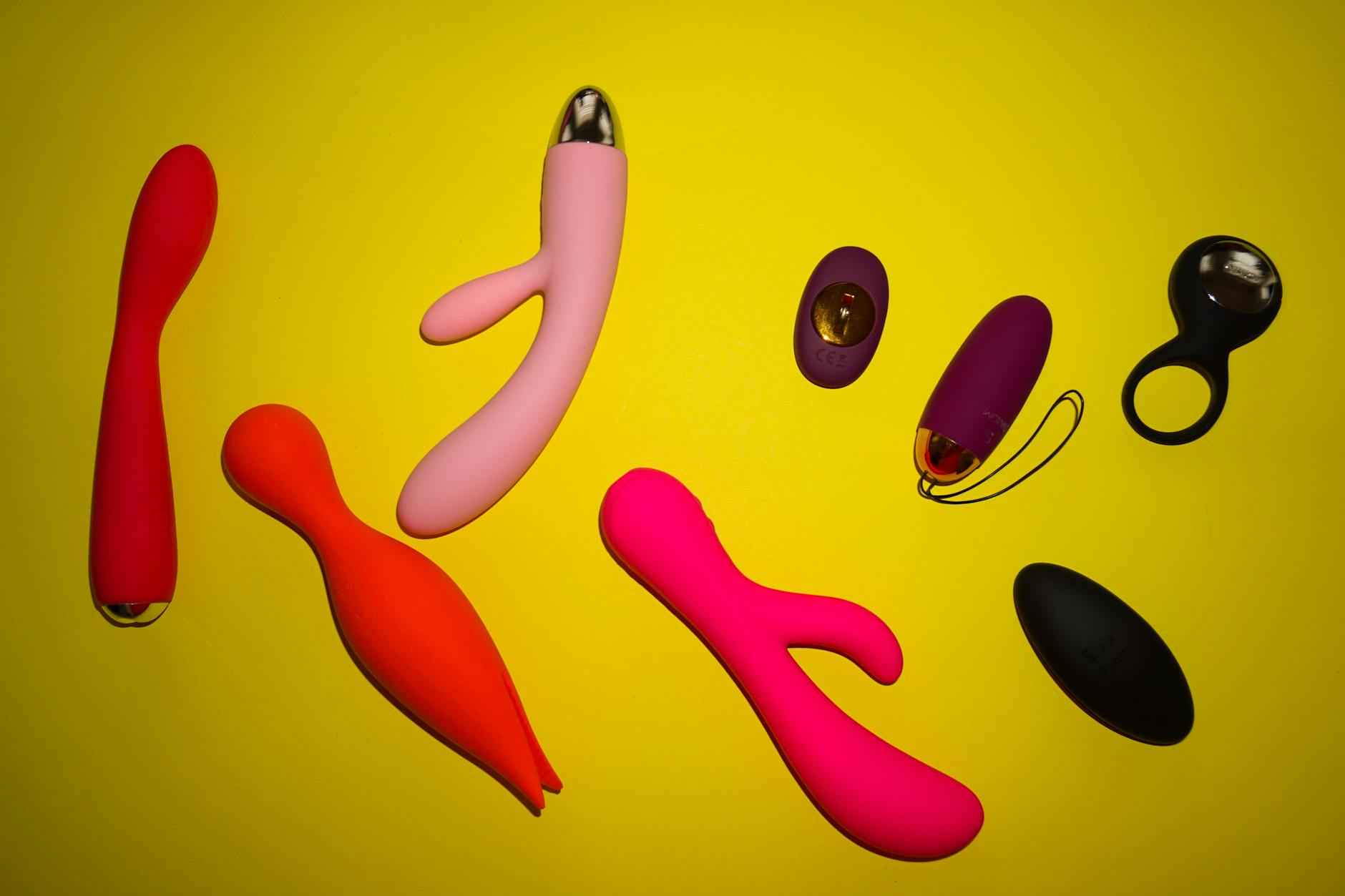
Photo by FounderTips . on Pexels
The setup that actually works
Slower arousal needs setup. Build in time. Budget forty minutes instead of twenty. The first fifteen to twenty minutes of that aren't dead time. They're the foundation.
Start with something that turns you on mentally. Read something, watch something, think about something that genuinely makes your brain light up. Arousal starts in your brain, not your genitals, and if your mental arousal isn't happening, you're asking your body to do something your mind hasn't signed up for yet.
Then build external stimulation slowly. Hands. Touch. Kissing your own neck or arms. Whatever reminds your nervous system that pleasure is coming. This isn't foreplay in the traditional sense. It's your body's entrance ramp into a different mode.
When you bring in the lemon vibrator, use it on your inner thighs, labia, anywhere around the clitoris for the first few minutes before direct contact. The suction pulls blood into the whole vulval region, not just one point. Your tissue gets more engorged overall. By the time you bring it directly to your clitoris, you're actually ready, not just willing.
If you're partnered
Conversation first, always. Tell your partner what's actually happening. "I'm arousing slower right now, and I've realized that's actually good news because it means I can go longer and end up more satisfied. Here's what I need from you." This is not a limitation to apologize for. It's information that helps both of you.
If your partner tends to rush, talk about it outside the bedroom. Say something like, "When we're together, I want to pace things differently. I need more time to build. That's not about you. That's about what my body's asking for." Most partners respond really well to clarity. They're often just matching what they think you want.
You can also use a lemon vibrator together. If your partner's involved, having a toy that doesn't require constant positioning or repositioning takes pressure off both of you. One of you can hold the device while the other person focuses on touch, kissing, or their own arousal. You're working as a system instead of performing for each other.
The timeline you're actually looking for
When arousal is slower, you're not aiming for "hard and fast." You're aiming for sustained. Ten to fifteen minutes of building sensation at a comfortable level beats two minutes of intensity that leaves you deflated.
Watch your own body's cues instead of the clock. If you're at pattern two and things are slowly building, stay there. Don't advance the pattern just because you think you should. The orgasm that comes from patient buildup feels completely different from a quick climb. More waves. More depth. Different kind of satisfying.
If you're using a lemon vibrator solo, experiment with pattern changes. Some people find that starting low and incrementally moving up over fifteen minutes produces a better orgasm than jumping straight to high. Others need to stay on one pattern and let the suction do the work while they focus on their breath or fantasy.
When something's blocking the timeline
If arousal is slow and it's genuinely distressing, or if it's happening alongside pain or complete numbness, that's worth a conversation with a healthcare provider. Slower arousal is normal. Complete absence of arousal despite interest and stimulation might signal hormonal shifts that benefit from treatment, or sometimes medication side effects that could be adjusted.
But here's the distinction: "I'm arousing slower than I used to" is different from "I'm not arousing at all no matter what I try." The first is rhythm. The second might need outside help. Both are solvable.
If stress is the blocker, the work is often external to sex. Sleep, movement, lowering overall cortisol. Sometimes a therapist. Sometimes just acknowledging that you're running on fumes and giving yourself permission to slow down everything, not just arousal. Sex is the last thing that gets better when your nervous system is burnt out.

Photo by cottonbro studio on Pexels
The lemon sucker as a built-in permission slip
Here's what I love about lemon vibrators for slower arousal: they give you permission to take time. You can't rush an air-suction device. It works at its own pace. You physically can't make it go faster by being impatient. So you stop trying. You settle in. You let yourself take the time your body's asking for, and somehow that surrender makes the whole experience better.
When you're using a lemon clitoral vibrator solo, you're also removing the variable of another person. You're not managing their pleasure or their timeline. You're just tending to your own. That alone changes the nervous system response. Less performance pressure. More actual sensation.
Start on a lower pattern than you think you need. Spend more time than feels necessary in the warm-up phase. Trust that patience produces better results than speed. Your arousal timeline has shifted, and that's not a problem to solve. It's just new information about how to work with your body instead of against it.
FAQ
How long should slower arousal actually take?
There's no universal timeline, but fifteen to thirty minutes of buildup before you feel fully aroused is actually normal for a lot of people. The key is that it feels good during that time, not that you're waiting for something better to start. If you're using a lemon vibrator on a low setting during that buildup phase, you're activating pleasure the whole time, not just waiting.
Does slower arousal mean lower libido?
Not necessarily. Libido is your desire to have sex or engage with pleasure. Arousal is your body's physiological response. You can have high libido (you really want it) and slower arousal (your body takes time to respond). They're different systems. Some people have always aroused slowly and never noticed because they had the time and privacy to let it happen. Life changes just made it more obvious.
Will a lemon vibrator fix slow arousal?
It won't fix it because slow arousal isn't broken. What a lemon clitoral vibrator does is work with slower arousal instead of against it. The air-suction design stimulates while your tissue is still warming up, so you're not waiting for enough blood flow to make vibration feel good. You're getting sensation and building arousal simultaneously. That's the shift that matters.
Is it normal for arousal to slow down in relationships?
Completely normal, especially if a relationship has been going for a while. Initial excitement creates arousal chemicals. Over time, that wears off unless you're actively creating novelty or deepening intimacy. Adding a toy, changing location, changing timing, or simply taking more time can all shift the pattern. It's not a sign the relationship is failing. It's just a sign that your system needs something different to get activated.
Should I tell my partner my arousal is slower?
Yes. Not as an apology or a complaint, but as information. "I've noticed I'm arousing slower now, and I actually think that's fine. It means I need more time, but I also end up more satisfied. Here's how that could work for us." Most partners really appreciate clarity instead of guessing why things have shifted.
Can medications actually slow arousal that much?
Absolutely. SSRIs, some blood pressure medications, antihistamines, and others absolutely change arousal speed. If you started a new medication and your arousal changed at the same time, it's worth asking your prescriber if there's an alternative, or if the arousal shift is temporary while your body adjusts. Sometimes it resolves in a few weeks. Sometimes not. Either way, it's worth naming.
Slower arousal isn't a setback. It's just a different rhythm. When you stop fighting it and start working with it, lemon vibrators become a tool that matches your body's actual timeline instead of asking you to perform against it. That's when the real pleasure starts.