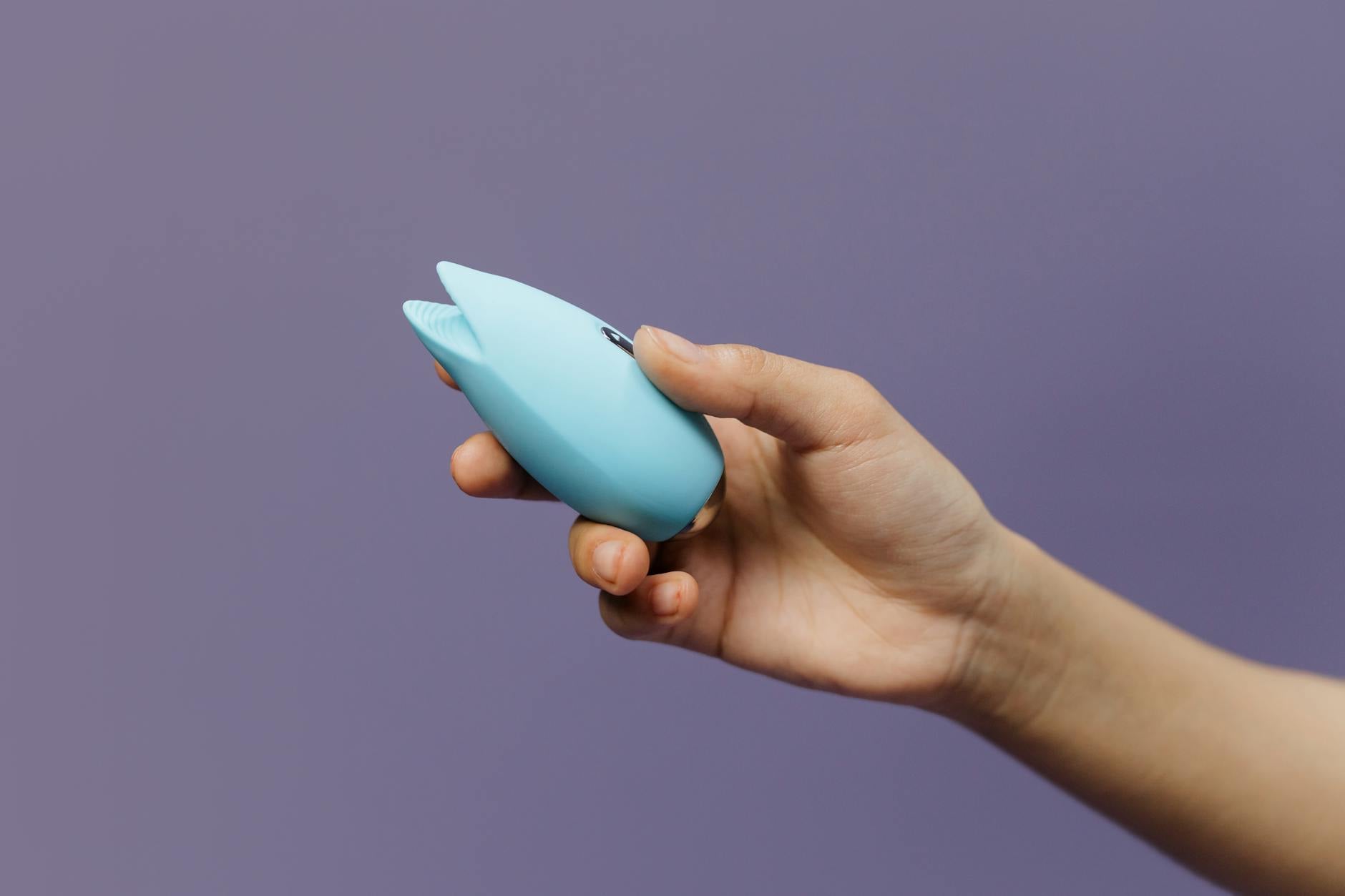
When vibration feels like too much
Here's the thing: not everyone's nervous system responds to vibration the same way. For some people, a clitoral vibrator feels like the perfect amount of stimulation. For others, even the gentlest setting of a lemon vibrator feels sharp, overwhelming, or even slightly painful. That's not a problem with the toy or with you. It's just information.
Oversensitivity to vibration is surprisingly common and often goes unspoken. You might assume you're broken or that clitoral toys simply aren't for you. But that's rarely true. What's actually happening is that your nerve endings are firing at a different threshold than someone else's, or your body is protecting itself from something else going on in your life.
I've worked with dozens of clients who thought they'd never use a clitoral vibrator until they learned to approach it differently. Here's how.
Why sensation can feel overwhelming
Vibration triggers rapid-fire nerve signals. Your clitoris has thousands of nerve endings concentrated in a tiny area. When vibration hits that zone, the sensation can feel disproportionately intense compared to other parts of your body. This is actually normal anatomy, not a flaw.
But oversensitivity specifically often points to one of three things:
Pelvic floor tension. When your pelvic floor muscles are chronically tight, even mild stimulation can feel jangling or uncomfortable. You might not realize you're holding tension there. Stress, anxiety, past trauma, and even sitting in poor posture all contribute.
Nerve sensitivity from stress or anxiety. When your nervous system is in a heightened state, your body defends against input more aggressively. Everything feels like too much, not just vibration.
Vulva inflammation or irritation. Sometimes the issue isn't the toy or your sensitivity but an actual inflammation response. Irritant dermatitis, minor infections, or even soap residue can make touch feel sharp rather than pleasurable.
Before you dive into desensitization work, rule out the third one. If the area is red, itchy, or swollen, pause toy use and see a gynaecologist. Everything else can be retramed with patience.
Start with indirect stimulation
The most effective way to build comfort is to avoid direct clitoral contact at first. This sounds counterintuitive when you're holding a lemon vibrator designed for clitoral pleasure, but trust me.
Try these approaches instead:
Use it over underwear or a thin layer of fabric. The barrier diffuses the vibration. It feels softer, less pointed. You're still getting stimulation, but distributed across a wider area. Leave it on the lowest setting.
Stimulate the labia or inner thighs first. Spend 10 to 15 minutes (yes, that long) warming up areas around the clitoris but not directly on it. The vibration will eventually radiate inward anyway, and you're giving your nervous system time to acclimate.
Hold it against the mons pubis. That's the padded area above your clitoris. The vibration spreads downward in a more diffuse way, and you have more control over intensity through pressure and positioning.
Most people find that after 5 to 10 sessions of indirect stimulation, direct contact starts to feel less startling and more genuinely pleasurable.
Master the power settings
Lemon vibrators typically have multiple intensity levels. Most people assume they should max it out for the best result. That's backwards if you're dealing with oversensitivity.
Setting 1 is not a teaser. It's a legitimate option. Spend at least three to five sessions exploring only the lowest setting before moving up. You're not failing at pleasure. You're building a foundation.
When you do move to setting 2 or 3, use it for shorter bursts. Thirty seconds on, 30 seconds off. Let your nervous system recalibrate between pulses. This trains your body to tolerate the sensation without flooding your system.
If you find that even the lowest setting triggers a sharp or uncomfortable response, you might benefit from working with pelvic floor tension first. That's a separate issue worth addressing with a pelvic floor physical therapist before you continue with toy exploration.
Reduce pelvic floor tension
This is the single most effective intervention I recommend, and it often works faster than anything else.
Your pelvic floor muscles are under your voluntary control, but most people don't think about them until something goes wrong. When you're stressed or anxious, you unconsciously clench those muscles, the same way you might tense your shoulders or jaw. Over time, that becomes your baseline.
When you then apply vibration to tissue attached to chronically tight muscles, everything amplifies. It's like trying to relax when your entire body is already braced.
Two practices help:
Progressive relaxation. Lie down and consciously relax your pelvic floor the way you'd relax any other muscle group. Tighten for a count of three, then fully release for a count of five. Repeat 10 times. Do this daily, away from toy use, for a week before trying your lemon vibrator again.
Breathing into the pelvic floor. On the inhale, imagine your pelvic floor relaxing and opening. On the exhale, let any lingering tension go. Practice this for five minutes before using any vibrator.
If you've experienced pelvic pain, trauma, or vaginismus, a pelvic floor physical therapist is genuinely worth the investment. They can teach you techniques that a blog post can't quite capture, and they can rule out structural issues.
Work with lubrication and comfort
Dryness or irritation makes vibration feel harsh. Lubrication changes everything.
Use a generous amount of water-based lube on both the toy and your external genitalia. Not just a token dab. Lube reduces friction and lets the vibration feel more like a gentle buzz and less like a jackhammer.
When you're first reintroducing vibration, err on the side of too much lube. You can always use less as your comfort increases.
Some people also find that warming the area with gentle manual touch first helps. Spend five minutes with your fingers, no toys, building warmth and blood flow. Then introduce the vibrator.
The timing matters more than you think
When you use a clitoral vibrator also affects how sensation feels. If you're stressed, tired, or not genuinely in the mood, everything will feel more intense and less pleasant.
Choose a time when you're already somewhat aroused. Not just physically, but mentally. You've got time, privacy, and genuine interest in exploring. Arousal naturally increases blood flow to your genitals and slightly desensitizes the area to input, which is exactly what you need.
Avoid using a lemon vibrator when you're anxious about using it. That defeats the entire purpose. If you're nervous about the sensation, your nervous system will respond defensively. Save toy exploration for moments when you're genuinely curious, not when you're testing yourself.
Consider a different toy or approach
Sometimes the answer isn't to push through oversensitivity. Sometimes it's to acknowledge that a traditional vibrator isn't your tool right now, and that's fine.
Air-suction devices like the Lemon work differently than conventional vibrators. They create a gentle pulsing sensation rather than rapid buzzing, which some people with sensitive systems tolerate better. If direct vibration continues to feel overwhelming, exploring other stimulation types might be worth your time. How to Use Lemon Vibrators With Anxiety or Sensory Sensitivity covers this in more depth.
Alternatively, manual touch might be your primary tool for now, with toys playing a supporting role later. There's no timeline here. Your pleasure doesn't have to look like anyone else's.
When to loop in professional support
If you've been working on this for four to six weeks and sensation still feels painful or unbearable, reach out to a healthcare provider. Oversensitivity sometimes signals an underlying condition that benefits from proper diagnosis.
A pelvic health physical therapist can assess whether pelvic floor tension is the culprit and design a treatment plan. A gynaecologist can rule out inflammation or dermatological issues. And if anxiety is amplifying sensation, talking through that with a therapist often unlocks progress faster than any other single intervention.
This isn't failure. It's gathering better information about your body.
FAQ
Can oversensitivity to lemon vibrators go away?
Yes, almost always. It typically takes two to four weeks of consistent work with lower intensity, indirect stimulation, and pelvic floor relaxation. Some people see results faster. The key is patience and consistent practice, not pushing past discomfort.
Is it normal for vibration to feel painful?
Sharp or burning pain is not normal and worth investigating with a gynaecologist. Discomfort that feels like overstimulation or nerve irritation often improves with the techniques here. If pain persists, get it checked out.
Should I use my lemon vibrator if it feels uncomfortable?
No. There's a difference between "this feels weird and I'm learning to adjust" and "this hurts." Discomfort is information. Respect it. Back off and try a different approach.
Does anxiety make vibration feel more intense?
Completely. When your nervous system is in a protective state, it perceives sensation more sharply and responds with more tension. Addressing underlying anxiety often solves oversensitivity faster than anything else.
Can tighter pelvic floor muscles cause oversensitivity?
Absolutely. Chronic tension in the pelvic floor amplifies sensation and can make even gentle stimulation feel jangling or uncomfortable. Progressive relaxation and breathing work usually help within days.
How long should I stay at the lowest setting before moving up?
There's no strict rule. Three to five sessions minimum. Some people spend weeks at the lowest setting and that's perfect. Move up only when the current level feels genuinely pleasant, not just tolerable.
You're not broken
Oversensitivity to clitoral vibrators is common, manageable, and usually fixable with straightforward adjustments. Most people who think toys aren't for them simply haven't found the right approach yet. Start indirect, keep intensity low, address pelvic floor tension, and give your nervous system time to recalibrate. Pleasure isn't a destination you rush toward. It's something you build, one comfortable session at a time. If you want to talk through your specific situation or explore other avenues, reach out to our team.