Here's the thing about orgasm pressure
Orgasm anxiety is the fastest way to guarantee you won't have one. Your nervous system knows when you're performing rather than experiencing, and the second it detects judgment (from yourself or your partner), it hits the brakes. This is not weakness. This is neurology. When you're in your head worrying about whether you're taking too long or if something's wrong with you, your prefrontal cortex is literally running the show, which means the sensory centers that actually generate pleasure are sitting in the dark.
Orgasm pressure shows up in a lot of shapes. Sometimes it's external. Your partner watches and waits. Sometimes it's the clock on your nightstand. Sometimes it's just your own voice saying "Come on, why isn't this working?" All of these point to the same problem: you're treating orgasm like a destination instead of a side effect of being fully present in sensation.
The good news is that lemon vibrators, used in a specific mindset shift, are genuinely effective tools for breaking this cycle. Not because they're magic. Because they're excellent at redirecting your attention away from the goal and back into the body.
Why orgasm pressure exists in the first place
We're taught early that sex should follow a pretty linear path: arousal, plateau, orgasm, resolution. Textbook stuff. The reality is messier and more variable than that, but we never get permission to deviate from the script. So when your experience doesn't match the script (slower buildup, plateau that lasts a while, arousal that comes and goes), you assume something's broken.
Add a partner into the mix and the pressure intensifies. You're now responsible not just for your own pleasure but for being "easy," for not taking "too long," for validating their effort. That's a massive cognitive load on top of trying to feel something physically.
For people who've experienced trauma or who carry shame about their bodies, this pressure is even heavier. The nervous system needs permission to relax before pleasure is even possible. And right now, you're giving it the opposite message.
How lemon vibrators help interrupt the performance loop
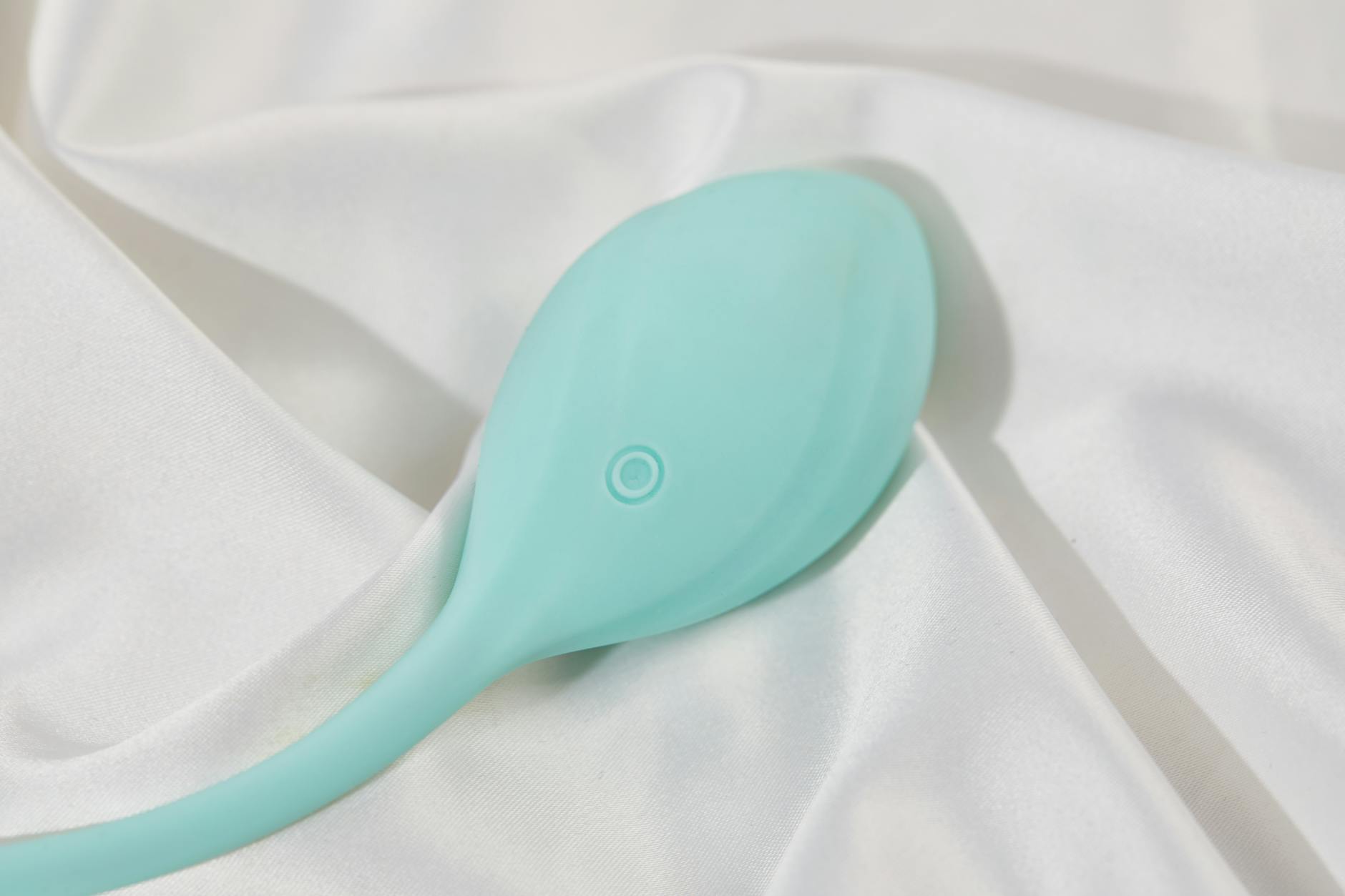
The suction-based design of lemon clitoral vibrators works differently than traditional vibrators. Instead of relying on friction and pressure, they create a gentle pulsing sensation that stimulates without demanding intense focus. This matters because it lowers the barrier to sensation.
When you're using a device that requires your active participation (grinding, thrusting, careful positioning), your brain stays engaged in the mechanics. With a lemon vibrator, you can sit still and let the device work. This sounds small. It changes everything.
The second shift is attention. Because the sensation from a quality lemon sucker is distinct and somewhat novel, your mind naturally redirects toward it. You stop thinking about whether this is taking too long and start noticing the actual feeling. This is why many people report that they can't think about anything else when using a lemon vibrator. The sensation is strong enough to be genuinely distracting.
That distraction is the goal. You want your prefrontal cortex (the worrying part) quiet and your sensory centers (the feeling part) loud.
The reframing that actually matters
None of this works if you're still treating orgasm as the win condition. So let's reframe.
Start by separating pleasure from orgasm in your mind. These are not the same thing. You can have intense, full-body pleasure without ever reaching orgasm. You can have an orgasm while feeling almost nothing. Most of us have experienced both. The one worth chasing is the pleasure, not the climax.
When you sit down with a lemon vibrator, give yourself permission to have zero expectations. Not "I hope I orgasm." Not "I hope this feels better than last time." Just "I'm going to pay attention to what I actually feel for the next 20 minutes, and whatever happens, that's fine."
This is harder than it sounds because your brain will fight you on it. It will want to monitor. It will want to check your progress. When that happens (and it will), gently bring your attention back to sensation. Where exactly are you feeling the vibration? Is it consistent or pulsing? Does it feel better at this angle or that one?
The person you're removing from the equation is you, the evaluator. The person you're keeping is you, the sensor.
Practical setup for pressure-free sessions
If you're using a lemon vibrator solo, your setup is straightforward. Pick a time when you have at least 30 minutes and won't be interrupted. Phone away. No clock visible. This is important because clock-watching is one of the fastest ways to snap back into performance mode.
Start with a pattern or intensity level that's lower than you think you need. Most lemon vibrators have 2-5 settings. Begin at 1 or 2 and stay there for at least 5 minutes. Your body needs time to warm up and for sensation to build. If you jump to high intensity right away, you override the gentleness that makes this approach work.
If you're with a partner, have a conversation beforehand that explicitly removes orgasm as the outcome. Something like "I'm working on getting out of my head during this. If I don't come, that's not a failure. What I actually want is to be fully present with sensation." A partner who loves you will find this easier and more intimate than the pressure-filled version you might be currently running.
Your partner's role is not to watch or wait or manage the situation. It's to give you space and time. That can look like them being in the same room but occupied elsewhere, or them gently touching you while you use the lemon vibrator, with zero expectation of what comes next.
What happens when your nervous system finally relaxes
Here's what I see in my practice over and over: the moment someone stops chasing the orgasm, it becomes easier to find. Not guaranteed. The body's still doing its own thing and doesn't owe anyone a climax. But the removal of pressure does something measurable to your nervous system's state.
You shift from sympathetic (fight-or-flight) to parasympathetic (rest-and-digest). Your heart rate steadies. Your breath deepens. Blood flow moves toward your genitals instead of away from them. All of that happens because you stopped demanding a specific outcome and started just being present.
Some sessions, you'll still come. Some you won't. The difference is that when you don't, it's not a failure. It's just what happened today. And often, the sessions where you come easiest are the ones where you stopped measuring.
What to do if the pressure comes back
It will. You'll be having a perfectly good session and suddenly think "Oh good, this is working" and the second you think that, you'll feel the tightness return in your chest or your thighs. Your nervous system got pulled back into evaluation mode.
When this happens, don't panic. Don't get frustrated. Just notice it and gently return to sensation. "Okay, I caught myself. Let me feel this again." Each time you do this, you're building a new pattern.
If pressure returns consistently, that's worth exploring with a therapist, especially if it's connected to relationship dynamics or a history of performance expectations. How to Use Lemon Vibrators With Trauma-Informed Touch covers this more deeply.
The specific advantage of lemon design for this work
Why lemon clitoral vibrators specifically help with this? The suction mechanism creates a sensation that's different enough from other toys that it breaks your habitual patterns. Your nervous system has learned to tense up around your old routine. A new sensation pattern can actually help reset that.
The fact that lemon vibrators tend to have gentle, graduated intensity levels also matters. You're not jumping between off and overwhelming. You can stay in a sweet spot of sensation that's pleasurable without being intense, which keeps your nervous system calm and receptive.
If you've never used a lemon sucker, the learning curve is also part of the benefit. You're genuinely focusing on figuring out what works instead of being able to autopilot into your usual performance.
FAQ: Pressure, pleasure, and lemon vibrators
Why do I feel like I'm "failing" if I don't orgasm?
This usually comes from one of three places: a partner who's made orgasm the goal, a sex-positive culture that treats multiple orgasms as the ideal, or your own internal narrative about what "good sex" looks like. None of these are your fault, but they are worth questioning. Pleasure without orgasm is still genuine pleasure. You're not failing if your body doesn't do the thing.
Can using a lemon vibrator actually help me get out of my head?
Yes, but only if you're using it with the right intention. If you're using it thinking "This should help me come faster," you're still in performance mode. If you're using it thinking "I'm going to notice what this feels like," the distraction factor actually works. The tool is the same. The mindset is what changes the outcome.
What if I'm with a partner who needs me to orgasm to feel good about themselves?
That's a relationship dynamic issue, not a vibrator issue. You might need to have a deeper conversation about what you both actually want from sex and whether orgasm-as-proof-of-satisfaction is a healthy metric. How to Use Lemon Vibrators When Your Partner is Skeptical or Resistant touches on this.
How long should a pressure-free session last?
At least 20 minutes, ideally 30 or more. This gives your body time to settle into parasympathetic mode and your nervous system time to believe that nothing is being demanded of it. Rushing through it defeats the point.
Is it normal to feel "broken" when orgasm doesn't happen easily?
Completely normal and completely inaccurate. Plenty of people experience inconsistent orgasms, delayed orgasms, or situational challenges with coming. This doesn't mean you're broken. It usually means your nervous system is protecting you from something (pressure, unsafety, distraction, timing, medication, hormones). The solution is rarely forcing harder. It's usually figuring out what your nervous system needs to relax.
Can I use a lemon vibrator to help with orgasm during partnered sex?
Absolutely. Many people find that using a lemon clitoral vibrator during partnered sex actually reduces pressure because it gives them direct control over their own pleasure instead of depending entirely on a partner's efforts. That autonomy can help the nervous system relax.
The real magic is permission
Lemon vibrators are good at what they do. But the real shift happens when you give yourself permission to want something other than orgasm. Permission to take as long as you need. Permission to feel good without proving anything. Permission to have your body do exactly what it does without narrating whether that's right or wrong.
That permission is what opens you up. The lemon sucker is just the tool that helps you stay in that open space long enough for your nervous system to actually believe you mean it.
If you're stuck in pressure mode and want to talk through what might actually help your specific situation, reach out. That's what I'm here for.