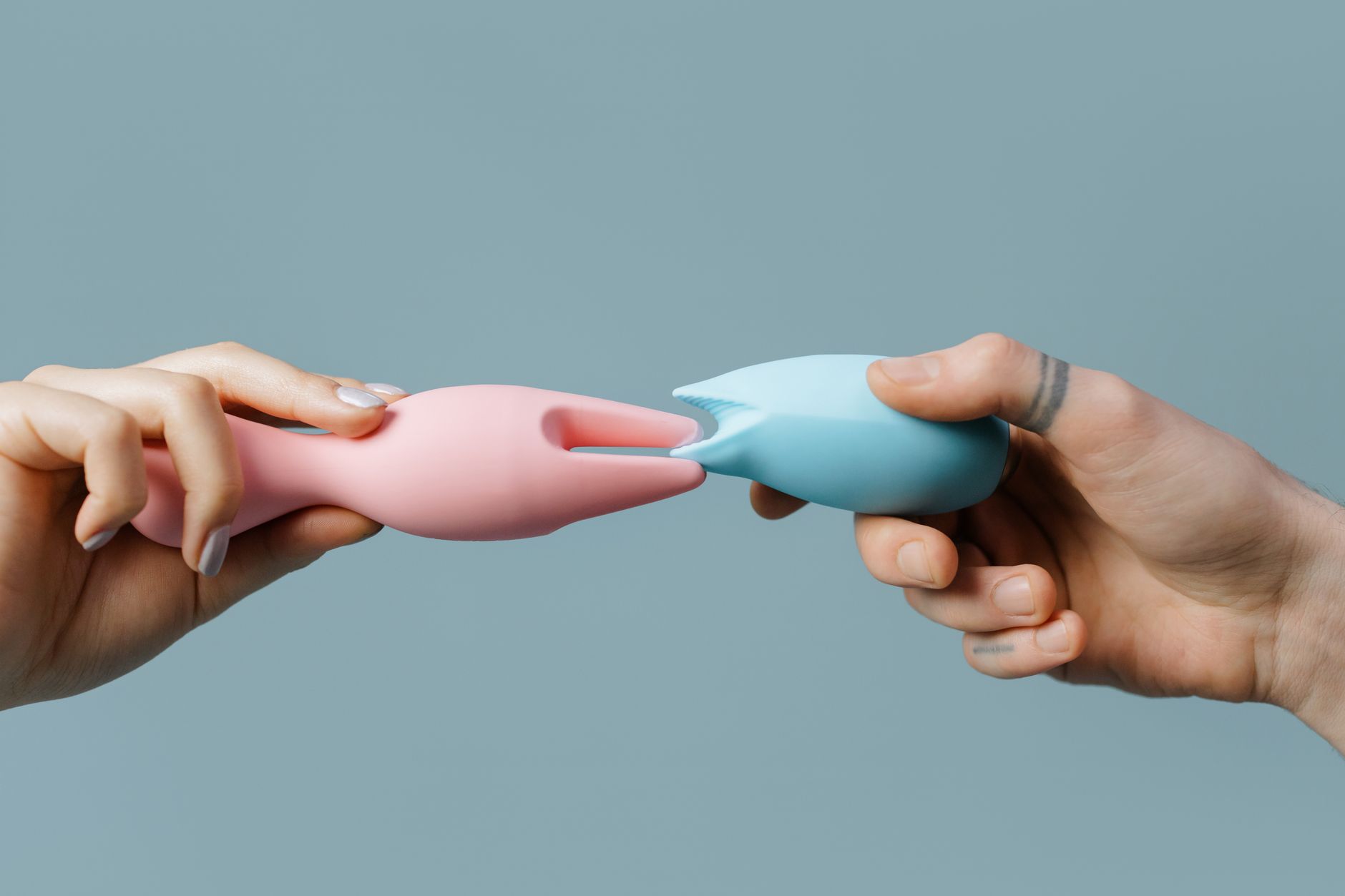
Here's the thing about new relationships and toys
The anxiety isn't really about the vibrator itself. It's about being seen. About someone new knowing what you like, what you need, what makes you feel good. That's vulnerable. Add in the low-grade worry that they'll think you're "high-maintenance" or that you somehow aren't satisfied with them, and suddenly a conversation about lemon vibrators or any clitoral vibrator feels impossibly loaded.
But it doesn't have to be. I've worked with hundreds of couples navigating this, and the pattern is always the same. The people who brought it up early, framed it as pleasure (not a workaround), and treated it as normal felt way less awkward than those who waited months and then apologized their way into the conversation.
Why timing matters more than you think
The best time to mention that you use a lemon vibrator isn't after sex. It's not after drinks. It's before sex becomes a regular thing between you two. That sounds counterintuitive, but here's why it works.
When you bring it up early—say, in the first two weeks of dating—it lands differently. It's part of who you are, not a surprise amendment to the relationship. You're saying, "This is something I do; I thought you should know" rather than "Surprise, I need this to feel good." One feels like information. The other feels like a problem you're trying to solve.
The sweet spot is the conversation that happens before clothes come off. Not weeks before. Just before. When you're already physically close, when sexuality is clearly on the table, when there's momentum. That's when you can say something like, "I love how this is going between us. I also want to mention that I use a vibrator—it really helps me get where I need to go. I'd love to incorporate that when we're together if you're comfortable with it."
Notice what's in that sentence: appreciation for him/her/them, clarity about what the vibrator does (helps you feel good), an invitation rather than a demand. All of that matters.
The frame that actually works
Most people go wrong by framing the vibrator as a problem. "I can't orgasm without it." "I need it to finish." "My ex and I always used toys." All of those invite defensiveness. Your partner hears, "I'm not enough," even if that's not what you meant.
Frame it as pleasure instead. "I love how it feels." "It gives me sensations I can't get any other way." "Using it together sounds really hot." Those are all true statements (assuming they are), and they put the focus where it belongs: on you feeling good, not on what's missing.
There's also a big difference between "I use a lemon vibrator" and "I want to use a vibrator with you." The first is about your solo life. The second is about your shared one. If you're introducing a toy to couple sex for the first time, that's the conversation to have—not a retrospective about your history with toys.
What to actually say (without sounding rehearsed)
You don't need a script. You need permission to be honest. Here's what that looks like in practice.
Start with something true and simple: "I really enjoy using a vibrator when I'm getting off, and I'd love to incorporate that with you if you're open to it."
If he/she/they seem genuinely curious rather than defensive, you can say more: "It's not that anything's wrong with what we're doing. It's just a different kind of stimulation, and it feels amazing. Plus, it takes the pressure off me to get there a certain way, which actually makes sex more relaxed."
If they seem hesitant, don't pivot into apology mode. Don't say, "Oh, it's totally fine if you're not comfortable!" and then drop it. That teaches them that their discomfort wins. Instead, ask what's underneath the hesitation: "What comes up for you about that?" Sometimes it's insecurity. Sometimes it's a misunderstanding about what using a toy actually means for intimacy. Sometimes it's logistics or curiosity they haven't named yet.
Listen to that, and then you can address it. If they're worried it means you're not attracted to them, you can clarify. If they're worried it'll feel weird, you can normalize it. If they just don't know how it would work, you can show them.
When they say yes (what to actually do)
If your new partner is open to it, don't overcomplicate the first time. You don't need to turn it into performance art. You need to show them it's normal and fun.
Start with it in your hands, not theirs. Use it on yourself while they watch and touch you. That removes the "am I doing this right?" anxiety from them and keeps the focus on your pleasure, which is where it should be. After you've gotten comfortable with them seeing it, ask if they want to hold it or control the pattern. Some people love that. Others prefer you to keep the reins.
Talk about sensation as it's happening. "That pattern feels incredible." "A little lower." "Keep doing that." This does two things: it keeps you connected and vocal (which most partners actually find hot), and it gives him/her/them real-time feedback instead of leaving them guessing.
After, don't make a big deal out of it. It's not a milestone. It's just something you did together that felt good. The more casual you can be about it afterward, the faster it becomes normal. You're training your nervous system that this is fine, and theirs too.
When they say no (and what that actually means)
Sometimes your new partner isn't ready. That's worth taking seriously, but it's not the same as a dealbreaker. Early hesitation usually dissolves with time and trust. Late hesitation—like six months in, when you've already been having sex regularly—might be different.
If they say no early on, you have a few choices. You can wait and revisit it in a few months, after they've gotten comfortable with you and sex isn't so new. You can use the vibrator in solo time and just not mention it again for a while. Or you can sit with the fact that this person might not be aligned with you on pleasure, and decide if that matters to your long-term compatibility.
That last option isn't dramatic. It's honest. If you know that you enjoy partnered sex with toys and this person is fundamentally opposed, that's information. You get to do something with it.
What you don't do: sneak it in. Bring it out "by accident" during sex. Frame it as a surprise. That erodes trust and makes sex weird, which is the opposite of what we're going for.
The role of the actual toy
There's something to be said for choosing the right device for this conversation. A luxury clitoral vibrator like a lemon vibrator—something with a sleek design, weighted construction, and genuine craftsmanship—reads differently than something that feels like a novelty. It says, "I care about my pleasure, and I've invested in something that works." That confidence is attractive.
It also gives you something to show, not just talk about. "This is a lemon clitoral vibrator. It's designed to feel like this," and then you can let them feel the pattern, the weight, the thought behind it. Seeing actual product design can shift the vibe from "weird secret thing" to "interesting tool we both get to explore."
After the first time, what changes
Once you've used a lemon vibrator together and the sky didn't fall, you get to stop overthinking it. You start to use it like you'd use your hand or mouth—as one option among many, not the main event. You start asking for it naturally: "Can you grab that for me?" You experiment with it in different positions. You maybe discover that you like a certain pattern only sometimes, or that it feels better at a specific point in sex.
You also get to relax about the imagined verdict from your partner. They're not scoring your pleasure. They're not judging your body or your needs. They're mostly just enjoying that you're enjoying yourself, which is what people usually want in sex anyway.
You can read more about how to use lemon vibrators when your partner is skeptical about toys if resistance shows up later, or how to use lemon vibrators when you feel embarrassed about asking for what you want if the conversation feels harder than it should.
Why this matters for the relationship
Talking about pleasure early sets a tone. It says that sex is something you discuss, that vulnerability is safe, that your needs are worth saying out loud. Those are the foundations of actual intimacy. A partner who can hear you talk about a vibrator and respond with curiosity instead of defensiveness is probably someone who can hear you about other stuff too.
The couples I've worked with who normalized toys early also report better communication about desire, boundaries, and what they want. They fight less about sex because they're not building resentment in silence. They try more things because the framework "we explore this together" is already established.
That's the real payoff of having an awkward conversation early. It's not about the toy. It's about what saying yes to your own pleasure teaches both of you about your relationship.
People also ask
What if my new partner thinks I'm asking him/her/them to use it on me because they can't satisfy me?
That's one of the most common worries, and it's worth addressing directly. You can say something like: "I want to be really clear—I'm not saying anything's missing. I love what we do together. This is about adding something that I love the feeling of, the same way you might want a specific touch or pace. It's not a replacement for anything. It's just another thing we can enjoy together." The key is to frame it as additive, not corrective.
Is it weird to use a lemon vibrator during partnered sex if I've never mentioned it before?
Yes, introducing it mid-act without talking about it first is awkward for both of you. It'll feel like a surprise, which usually lands as a betrayal instead of a turn-on. Give him/her/them the heads-up beforehand so they're not shocked and can decide how they feel about it.
How long should I wait into dating before bringing up vibrators?
Within the first two to three weeks is ideal, especially if sex is already happening or about to. The longer you wait, the more context it carries ("Why are you telling me this now?"). Early on, it's just information about who you are. Later on, it can feel like you were hiding something.
What if I'm worried he/she/they will think I'm too sexual or high-maintenance?
That anxiety usually tells you something worth knowing: you're worried about being fully yourself in this relationship. A partner who thinks you're "too sexual" because you use a vibrator isn't someone who can handle your actual sexuality. That's useful information. Someone who can embrace your pleasure without making it about them is someone worth keeping around.
Can I ask my partner to buy me a vibrator as part of this conversation?
You can, but it's cleaner to buy your own first. That way you're not asking someone to spend money on something they might not fully understand yet. Once you've used one together and they're genuinely interested, they might want to gift you one later. Let that unfold naturally.
Is it okay to use a lemon vibrator if my partner doesn't want to be involved?
Completely. Your solo pleasure doesn't require anyone's permission. If your partner isn't interested in using toys together but you want to, you get to have that in your private time. The only boundary that matters is honesty—they should know it's happening, not stumble onto it by accident.
What comes next
The awkwardness you're imagining right now is almost always bigger than the actual conversation. People are more open than you think. And even if this specific partner isn't, that tells you something important about compatibility. Your pleasure matters. Finding someone who gets that, or is willing to learn, is worth having one slightly uncomfortable conversation for.