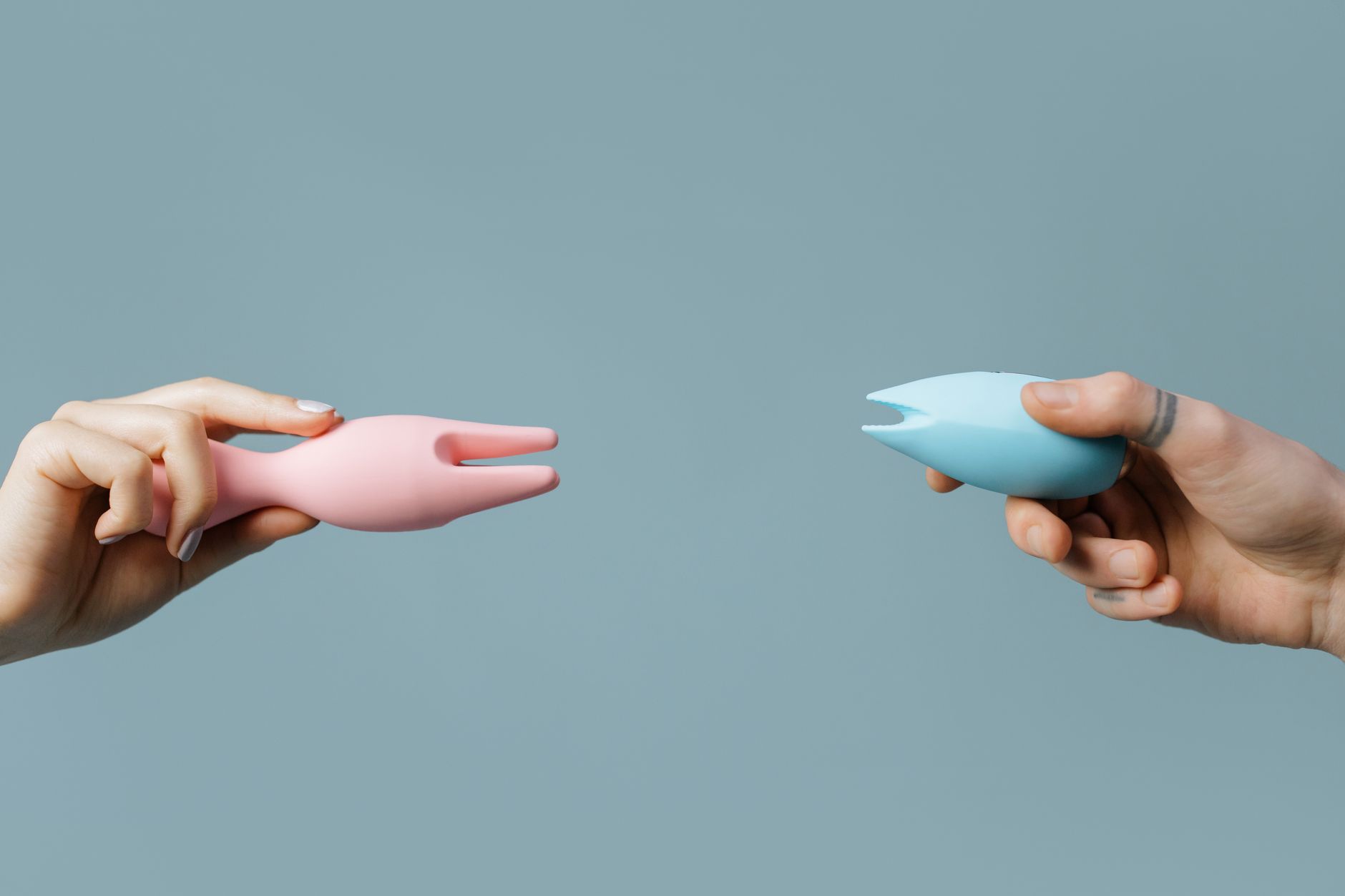
How to Use Lemon Vibrators When You Want to Explore Partnered Pleasure Without Feeling Self-Conscious
Introducing a lemon clitoral vibrator into sex with a partner doesn't require courage you don't have. Here's how to make it feel natural, fun, and genuinely connected.
Let's be honest: the moment you think about using a lemon vibrator during sex with a partner, your brain goes straight to shame. Not about the toy. About needing it. About what your partner might think. About whether this signals something's wrong. About whether you're "too much" or "not enough."
Here's what I see clinically: that anxiety has almost nothing to do with the vibrator and everything to do with how we've been taught to perform pleasure instead of experience it.
Most people with partners have never had a conversation about what would make sex better. We're trained to avoid the topic entirely. So when you finally introduce a clitoral vibrator into the mix, your partner's actual reaction is often relief. Relief that they get to know what you need. Relief that they don't have to guess. Relief that pleasure just became more mutual, not less.
The data backs this up. In couples who use adult toys together, sexual satisfaction increases across the board. Not because the toy is magic, but because using it requires communication. And communication is the actual magic.
Here's the part nobody tells you: most partners find it genuinely hot. Not condescending. Not emasculating. Actually attracted to watching you experience real pleasure instead of performed pleasure. There's a difference.
Don't introduce a lemon vibrator mid-sex. That's the first rule. Pick a calm moment, clothes on, zero pressure. Not in bed. Maybe over coffee or on a walk.
Start with curiosity instead of apology. "I've been thinking about trying something that might feel really good. Want to explore that together?" Notice the language: not "I need this" (which sounds like complaint), but "I've been thinking" (which sounds like desire) and "together" (which makes it a shared project).
If your partner asks why, don't hedge. Be specific. "I think my body would respond better to sustained suction rather than just internal pressure" is a million times better than "I don't know, I just feel like I need more." Specificity removes the sting of vagueness.
Answer questions directly. If they ask whether you've felt unsatisfied, tell the truth: "Not with you. With how my own body responds to different types of touch." There's a huge difference between "You're not enough" and "My body has preferences." The first is about them. The second is about you. Stick to the second.
Don't wait until you're already aroused to introduce the idea. And don't wait until things feel disconnected or broken. The best moment is when sex is already good and you're both feeling curious about making it better.
Similarly, the first time you use a lemon clitoral vibrator together, give yourself some breathing room. Don't plan it for a night when you're both exhausted or stressed. Don't make it the main event. Let it be a small part of a longer experience so there's less pressure on the toy itself.
Practically: use it as foreplay. Use it alongside penetration. Use it at the end when you're both close. Use it anywhere that feels natural. The goal isn't to suddenly have a different kind of sex. It's to layer in one more option that was never there before.
The first time, guide it yourself. Don't hand your partner the lemon vibrator and say "here, use this." That puts all the responsibility on them to figure out pressure, speed, angle. You know your body better. You show them.
Start at a low setting. Give yourself permission to enjoy it without performing. Your partner will feel less self-conscious if you're actually experiencing pleasure rather than acting like you're having an experience for their benefit. Real pleasure is contagious. Performed pleasure is awkward for everyone.
Talk as you go, but keep it simple. "I like this pressure" or "slower, yeah, that" instead of extensive narration. Your partner will feel more confident with clear, brief feedback than with silence or over-explanation.
After your first time, debrief casually. "That felt amazing" or "I liked how that combination felt" is sufficient. Don't over-analyze it. Don't turn it into therapy. Just name what worked so you both know to do it again.
Most couples find that using a clitoral vibrator during penetration creates a completely different sensation than either alone. The vibration amplifies everything without replacing sensation. If your partner worries the toy will be in the way, the answer is simple: it won't be. Most lemon vibrators are designed to sit on top of the clitoris while penetration happens below.
Some partners love holding it while penetrating. Some prefer their hands free. Some want you to hold it and control your own pleasure while they focus on their own experience. All of these are valid. You'll figure out your preference after the first time.
If you're having trouble with confidence, remember this: your partner chose to be with you. They find you attractive. Adding sensation doesn't change that. If anything, it gives them more evidence that they were right.
If they say no immediately, dig into what that's actually about. Is it a discomfort with sex toys generally? A worry about what it means? A concern about performance? The objection and the actual worry are often different things.
Listen without defending the toy. "You're nervous that this means I'm unsatisfied" is very different from "You think toys are weird," and the response changes accordingly.
Give them time. People's comfort with new things often shifts once they've processed the idea. A month later, they might surprise you. Don't push. Just make sure they know you're interested if they ever want to explore.
In the meantime, explore your own pleasure solo. Use the lemon vibrator alone. Get comfortable with it. Get good at it. Confidence is attractive, and your own confidence in your pleasure will shift the energy around this entirely.
Using a clitoral vibrator with a partner isn't about needing help. It's about communicating that your pleasure is worth making space for. It's about asking for what your body needs without shame. It's about the two of you figuring out what sex can feel like when you're both invested in it being good.
That's the part that changes everything. Not the vibrator itself. The message beneath it: my pleasure matters, and I'm comfortable enough with you to say so.
Start there. The lemon sucker is just the vehicle.
Not if you frame it correctly. The difference between "You're not enough" and "My body enjoys this sensation" matters enormously. Most partners feel relieved, not threatened. You're giving them new information about your body, not criticism of theirs. If your partner does feel insecure about it, that's worth a deeper conversation about what that insecurity actually is. Often it's not about the toy at all.
Completely normal. We're trained to hide pleasure, especially from partners. You've probably spent years performing rather than experiencing. The embarrassment is cultural conditioning, not actual truth. Once you push through it once, it typically gets easier. Most couples who introduce toys together report that the awkwardness disappears after the first time.
Most positions work fine. Positions where you're face to face or side-by-side tend to feel more intimate and make communication easier. Positions where you're behind each other give better access to the vibrator. Play around. Your first attempt won't be perfect, and that's fine. Part of the fun is figuring out what works for your bodies together.
That's a deeper conversation, not a vibrator problem. Your partner gets to have preferences, and you get to have boundaries. If they're insisting you experience pleasure only in the way that's most convenient for them, that's a relationship question, not a toy question. You might find my guide on how to use lemon vibrators when you have different desire levels helpful for navigating this.
Start smaller if you need to. Ask what they like. Share what you like. Build the conversation slowly. Using a lemon vibrator together is actually easier than you think once you've established that talking about sex is something you do. If deeper communication feels hard, it might be worth working with a therapist or relationship coach to build that foundation first. The vibrator will still be there whenever you're ready.
That vulnerability is the entire point, and it's terrifying. Let yourself feel nervous. Tell your partner you're nervous. Guide them the first time so you have some control. Vulnerability strengthens bonds, but only if you move through it slowly enough to feel safe. You're learning to receive pleasure, which is harder than giving it. Be patient with yourself.
Introducing a lemon clitoral vibrator into partnered sex isn't about fixing anything. It's about expanding what's possible between you and someone you trust. The self-consciousness you feel right now isn't actually about the toy. It's about permission. Permission to want more. Permission to ask for it. Permission to experience real pleasure instead of performed pleasure.
Start the conversation. Your partner is probably more open than you think. And if they're not, that's data too. Either way, you'll know.