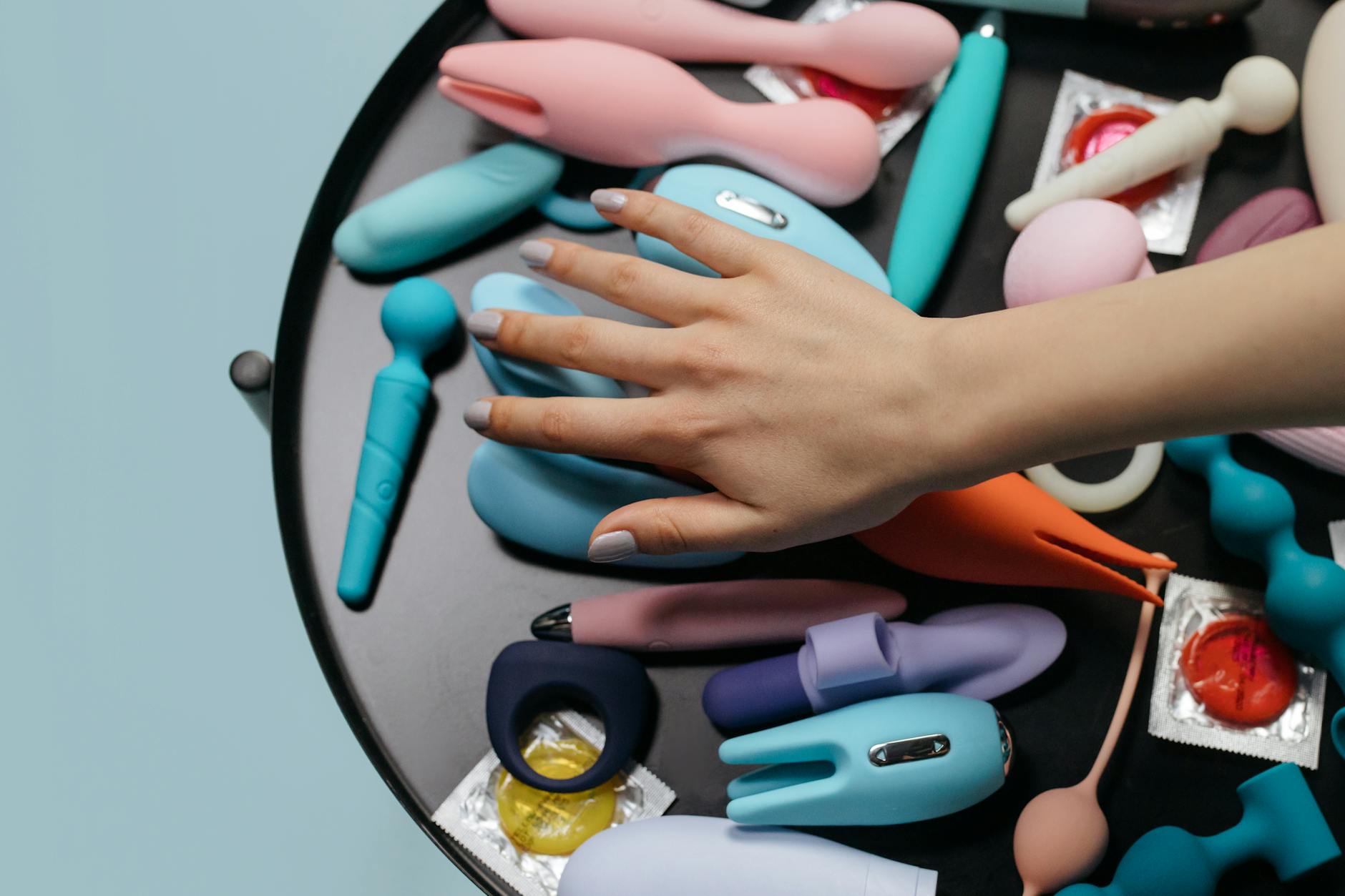
How to Use Lemon Vibrators When Your Libido Changes Throughout Your Cycle
Your desire isn't broken. Hormonal shifts reshape arousal patterns across your cycle. Here's how to use your lemon vibrator in sync with your body's natural rhythm instead of fighting it.
Your libido doesn't exist on a flat line. It rises and falls through your menstrual cycle in ways that feel random until you actually map them. The result? You might reach for your lemon vibrator on day 8 and feel nothing. Then day 14 hits and everything is electric. That's not a sign your body is broken. That's your hormones doing what they're supposed to do.
Most of us are taught to expect consistent desire, which sets us up to feel like failures when arousal dips. The truth is that estrogen and testosterone peak at different points in your cycle, which changes how your body responds to stimulation, how quickly you build arousal, and what kind of sensation actually works. Once you understand the pattern, you stop fighting your body and start working with it.
This is where lemon vibrators become genuinely useful tools. Not because they fix anything, but because you can adjust how and when you use them to match what your body actually needs.
Days 1-5 of your cycle are when hormones bottleneck. Both estrogen and progesterone are low, which means arousal takes longer to build and your body might feel tender or depleted. This phase gets unfairly ignored in conversations about pleasure, but it's actually valuable if you shift your expectations.
Many people skip self-pleasure entirely during their period. That's fine. But if you want to engage with your lemon vibrator, lighter touch and longer warmup are key. Your clitoris might feel more sensitive to direct pressure, so starting with a lower intensity setting on your vibrator prevents discomfort. The Lem's graduated intensity patterns work well here because you can begin at level 1 and give yourself permission to stay there. Some people find that gentle suction stimulation actually eases cramping by increasing blood flow.
Keep water-based lubricant nearby even if you're menstruating. Thinner tissue during this phase responds better with added glide. And the timeline? Budget 20-30 minutes. Your nervous system is in a lower gear, so forcing faster arousal creates frustration instead of pleasure.
Days 6-13 are when estrogen starts climbing. Your energy increases, your pelvic floor relaxes slightly, and arousal builds faster than it did a week ago. This is when you'll notice your lemon vibrator feels more responsive. You can go higher on the intensity dial, and the experience feels less clinical, more playful.
This is the phase where many people report feeling most connected to their body and most interested in exploring. If you've been struggling with motivation or disconnection, the follicular phase is your window. Your tissue is plumper, blood flow is richer, and the neural pathways for arousal are primed. Some people find they can achieve orgasm more easily during this window, especially with lemon clitoral vibrators that provide consistent, reliable stimulation without requiring the mental focus that manual techniques demand.
The other thing that shifts here is the timeline. Arousal that took 25 minutes in your menstrual phase might only take 10 now. You can experiment with building anticipation differently. Some partners find that this phase is when they want to integrate a lemon vibrator into shared pleasure, because the body is more naturally responsive and the pressure to perform softens.
Around day 14, testosterone spikes alongside estrogen. This is the phase where sensation feels sharpest, desire peaks, and many people report having their most intense orgasms of the month. Your clitoris is more engorged, the pelvic floor is less tense, and you might find yourself reaching for your vibrator more frequently just because the experience feels so good.
This is when you can safely experiment with higher intensity patterns without worrying you're being too rough. Your tissue can handle more direct stimulation because estrogen levels support tissue resilience. If you've been curious about what higher settings on your lemon vibrator actually feel like, ovulation is the time to find out. The risk of sensitizing yourself through overdoing it is lower because your hormonal environment is naturally protective.
Some people notice they want variety during this phase. Mixing direct clitoral stimulation with the Lem's pattern variations, or alternating between toy and partner touch, feels novel and satisfying in a way that might feel exhausting during lower-hormone phases. Your body has the energy to explore, and sensation is vivid enough that novelty creates genuine excitement rather than distraction.
Days 15-28 bring progesterone climbing while estrogen dips again. This phase gets a bad reputation because desire often decreases, but what's actually happening is more nuanced. Progesterone is higher, which relaxes the pelvic floor and can make arousal feel more internal and less urgent. Some people experience deeper, fuller orgasms during this phase even though they're not thinking about sex as much.
Mid-luteal (days 15-21) still feels relatively energized. Arousal is still accessible, though you might notice you want longer foreplay or more context before diving in. This is a good window to use your lemon vibrator if you're planning to, but expect it to take a bit longer than ovulation. That's not a problem. It's just physics.
Late luteal (days 22-28, sometimes called the "FMD window" or follicular-menstrual divide) is when progesterone peaks and many people feel lower libido, fatigue, and sometimes anxiety. This isn't the phase to push for pleasure. If arousal happens naturally, great. If you want to use your vibrator, keep it simple. Low intensity, warm up your body first, no pressure to reach a finish line. Some people find that solo pleasure during late luteal is less about achieving orgasm and more about self-care and touch, even if the touch comes from a vibrator.
This is also when medications like SSRIs, birth control, or supplements interact most noticeably with arousal. If you're on medications that affect sensation, the late luteal phase is often where you feel it most sharply. That's information, not a failure. Plan accordingly.
Once you start tracking arousal patterns through your cycle, you stop reaching for your lemon vibrator randomly and start using it strategically. That might look like: high-intensity exploration during ovulation, moderate use during follicular and early luteal, and gentler touch or complete rest during menstrual and late luteal.
But it can also just look like permission. Permission to acknowledge that day 22 isn't a good day for solo pleasure, so you don't try. Permission to take advantage of day 14 when everything feels easy. Permission to skip weeks entirely if life is heavy. And permission to use a reliable tool like the Lem exactly how it serves you, not how some generic guide says you "should."
If you're using your vibrator with a partner, syncing your cycle awareness matters too. Partners sometimes feel rejected when desire drops, especially if they don't understand it's hormonal and temporary. Naming the phase ("I'm in late luteal so my drive is lower, but I'm still into you") shifts the conversation from rejection to biology. That context often makes space for more creative intimacy instead of pressure-based sex.
You don't need an app if you don't want one. A simple calendar with four notes per month ("easy arousal", "deep arousal", "slow to build", "not interested") gives you the map you need. After two or three cycles, patterns emerge. You'll notice that your "quick orgasm phase" is always around the same days, or that partner sex feels best right after ovulation, or that late luteal needs total pressure-off tenderness instead of pleasure-chasing.
Once you know the pattern, you can plan dates, solo time, or communication around it. Some couples plan more elaborate shared intimacy during follicular and ovulatory phases and reserved, low-key touch during luteal. That's not limiting. It's actually liberating because nobody is confused about why things feel different.
If you're on hormonal birth control, your cycle patterns look different. Hormonal BC often flattens the peaks and valleys, which some people experience as more consistent desire and less extreme mood swings. It can also reduce sensation overall or shift when peaks happen. Tracking still matters because your individual pattern will emerge, it'll just look different from the typical 28-day model.
If you have PCOS, endometriosis, or irregular cycles, the standard ovulation window doesn't apply to you. What does matter is tracking your own body's signals: when does arousal feel easiest? When does sensation feel sharpest? When do you want rest? That individual data is more useful than fitting yourself into a generic framework.
And if you're perimenopausal or postmenopausal, hormonal shifts are flattening entirely. That's when the earlier guidance about longer arousal time and consistent lubrication becomes more relevant than cycle-tracking. Your lemon clitoral vibrator becomes even more useful because you're no longer waiting for hormones to peak. You're creating the conditions for arousal through other means.
Does birth control stop my cycle from affecting arousal?
It changes the effect, but doesn't erase it. Hormonal BC flattens hormonal peaks, so most people on BC don't experience the extreme swings in arousal that come with a natural cycle. But many people still notice small shifts in desire, sensation, and how easily they orgasm throughout their pill pack. Some birth control formulations also suppress libido more than others, which is worth discussing with your doctor if it feels like a problem. And if you're on a continuous or extended-cycle BC, you might have even flatter patterns. The point is: tracking still helps, but the peak might be less dramatic.
What if my libido doesn't follow a predictable pattern?
Cycle tracking only works if your cycles are relatively regular. If yours are irregular because of PCOS, thyroid issues, stress, or other factors, tracking over 2-3 months will still show you patterns, they'll just be less synchronized with calendar dates. Stress, sleep, and other factors often matter more than hormone phase anyway, so you might notice that your arousal tracks with your work schedule or social energy more than your period. That's legitimate data too. Use it.
Can I use my lemon vibrator while I'm on my period?
Absolutely. There's nothing unsafe about it. Some people find it helps with cramps. Others find their clitoris is too sensitive. Both are normal. Use lower intensity, give yourself extra time, and have lubricant available. If bleeding volume is heavy, take a break if you're feeling dizzy or depleted. Your pleasure toolkit includes the option to pause, not just push through.
Does hormonal birth control make lemon vibrators less effective?
Not inherently. But some BC formulations (especially higher-dose progestin pills) can blunt arousal and sensation overall, which means your vibrator might feel less intense. That's a BC effect, not a vibrator problem. Talking to your doctor about whether a different formulation might suit you better is worth considering. Some people switch to lower-hormone options and notice sensation improves immediately.
How long should it take to orgasm at different points in my cycle?
There's no universal timeline, but ovulation is typically faster and menstrual/late luteal phases are typically slower. If you're taking 15 minutes and that's actually enjoyable for you, that's perfect. The point isn't speed. It's noticing that the timeline changes and allowing it to, instead of treating your body like it's broken when it takes 25 minutes instead of 10.
What if my cycle makes me not want to use my vibrator at all?
Then don't. Some people feel zero interest in solo pleasure during certain phases, and that's completely normal. Your lemon vibrator is a tool for when you want it, not an obligation. Some months you'll use it constantly. Other months you'll barely touch it. Both are fine. The point of understanding your cycle is having permission to follow your actual desire instead of fighting it.
Your desire isn't a malfunction that needs fixing. It's a system that changes in predictable ways. Once you understand what's actually shifting, you stop blaming yourself for "not being in the mood" and start planning around real physiology. Some people find that this simple awareness instantly shifts their relationship with their own pleasure, because the shame drops away.
If you want to go deeper into this, talking with a partner about your cycle patterns can help them understand that rejection or low interest isn't personal. And if you're working with a therapist around intimacy or pleasure, bringing cycle awareness into the conversation gives you language to describe what's actually happening in your body.
Your lemon vibrator is a tool that works better when you use it at times that suit your body's natural rhythm. That's not forcing anything. That's just listening.