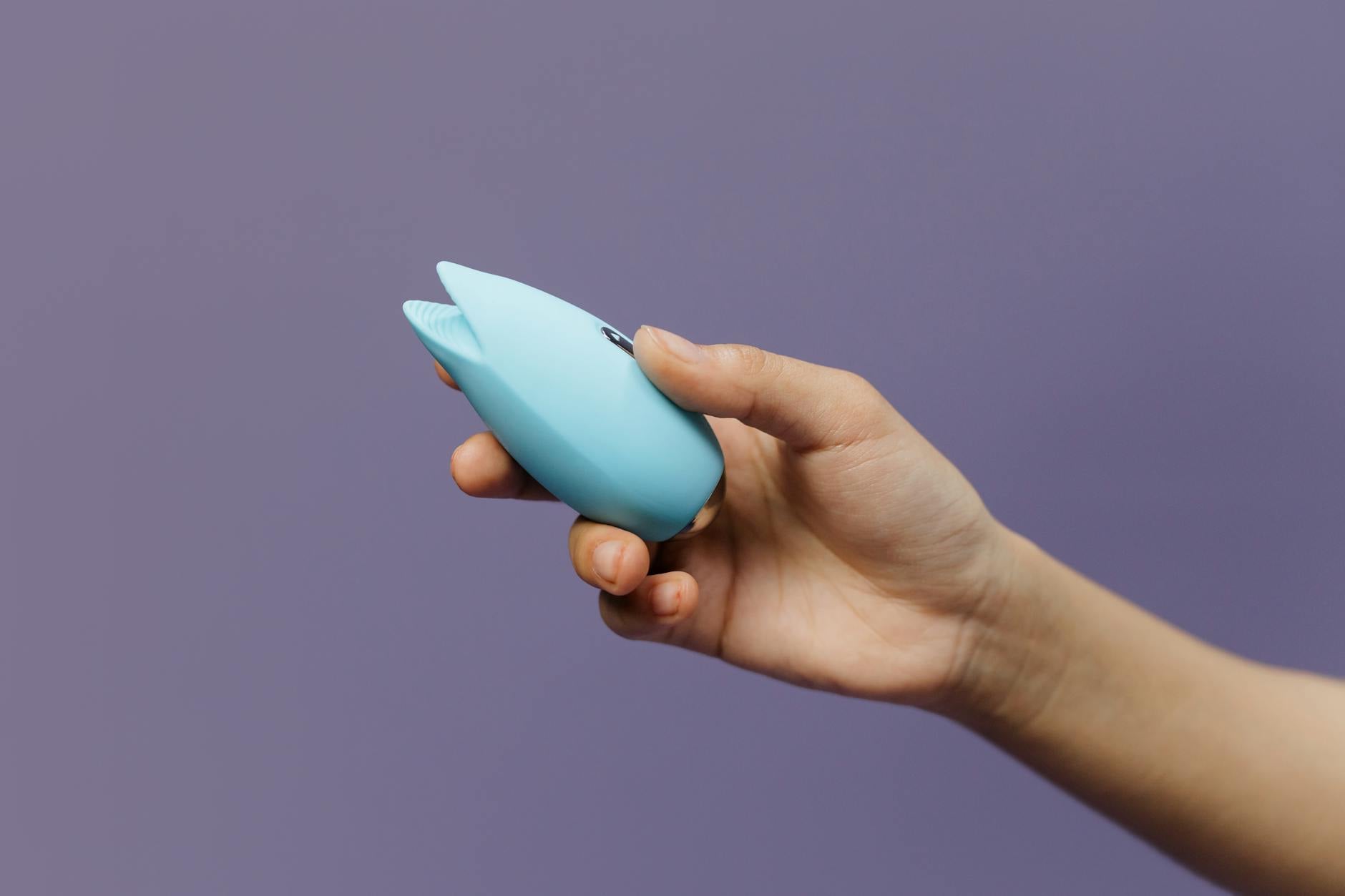
Let's name the thing that's actually happening
Your partner wants to be involved. They're curious, they're willing, and they care enough to try. But there's a layer of nervousness sitting on top of all that, and you're not sure how to move through it without making it worse. That nervousness is almost never about the toy itself. It's about competence, about doing it wrong, about whether this changes something between you. That's worth naming out loud.
Why partners get nervous about participating
Here's what I hear most often in my practice: your partner worries they'll mess something up. They don't know where to touch, how much pressure to use, whether they should be doing this at all. There's also a cultural layer. Many people grew up with the message that introducing a vibrator means their partner isn't enough, or that asking for one signals dissatisfaction. That's completely untrue, but the worry stays.
A lemon clitoral vibrator like the Lem works differently than fingers or a penis does. It's not replacing them. It's adding a layer of sensation that your body might respond to differently. When a partner understands that distinction, the nervousness often shifts into curiosity.
Another piece: your partner might be worried about hurting you. Vibrators have a reputation for being intense, which makes sense when you're imagining something powerful and harsh. But the design of a quality lemon sucker vibrator is specifically engineered for gentle, targeted stimulation. Once they hold one, see how small it is, feel how controlled the intensity actually is, a lot of that fear dissolves.
Start with conversation, not the toy
Don't hand them the vibrator and expect them to figure it out. Instead, talk first. Here's what works: "I want to show you something I've been enjoying. I'd love for you to be part of it. No pressure to do anything specific. We'll figure it out together."
That sentence does a lot of work. It centers the toy as addition, not replacement. It gives them permission to participate at whatever level feels comfortable. And it signals that you're in this as a team.
Then actually answer their questions. If they ask how it works, show them. Let them hold it. Let them feel the intensity on their own hand or arm first. Demystification kills nervousness faster than anything else. Once they feel how the vibrations work, feel the control they have over intensity and pattern, the abstract worry becomes concrete understanding.
The first time should feel exploratory, not performative
This is crucial. Your partner is already slightly in their head. If you set this up as a big production with expectations attached, their nervous system will stay in that protective place. Instead, create space for it to feel like play.
One approach: use it on yourself while they watch and touch you. Not in a scripted way. Just naturally. Let them see your response. Let them notice what you respond to. Then ask if they want to try. "Want to hold it for a bit? See what you notice?"
This takes the pressure off them to perform or be the expert. They're observing and experimenting, not executing a technique. Their job is just to pay attention to what you're experiencing and what feels good to them.
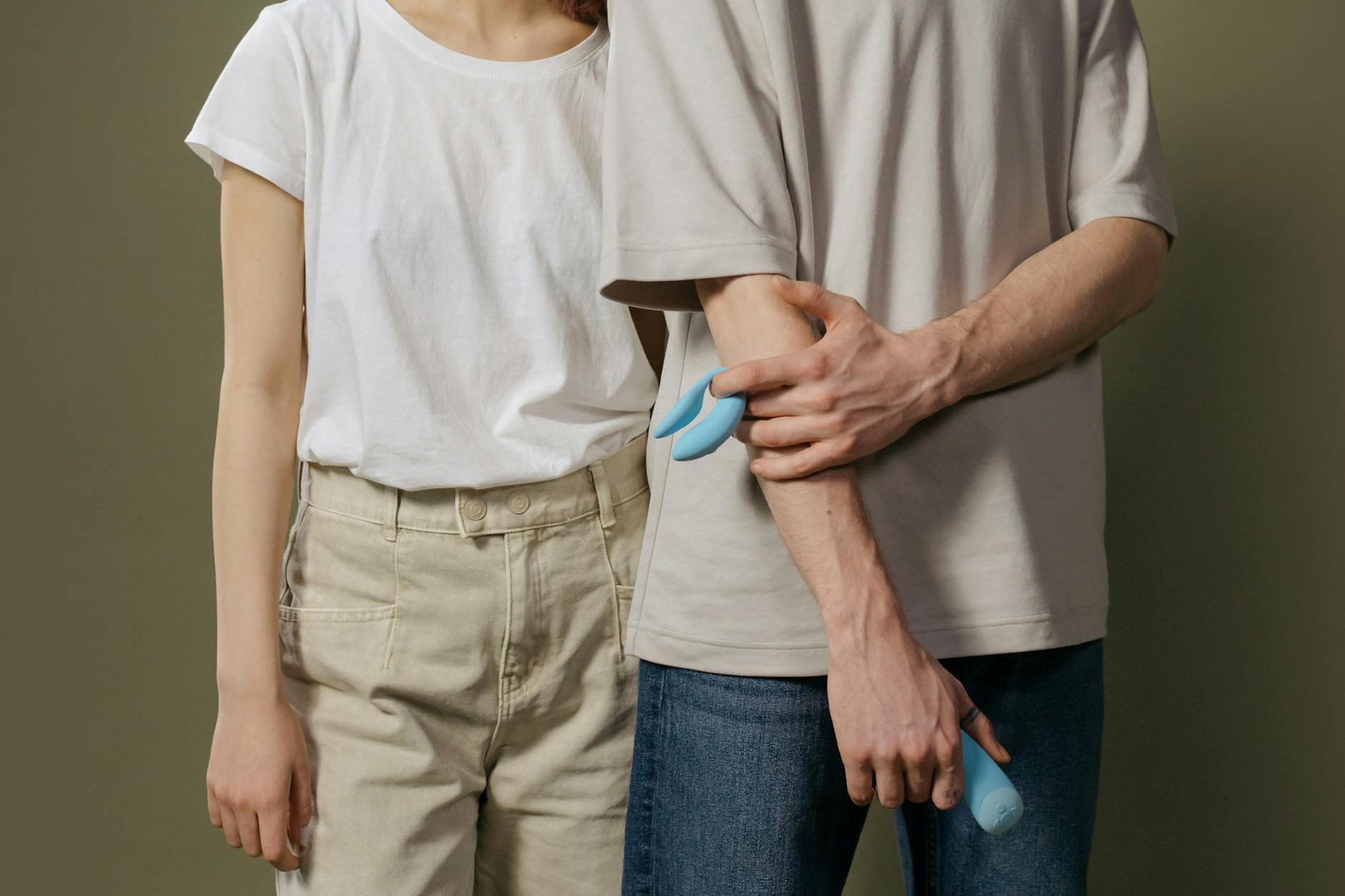
Photo by cottonbro studio on Pexels
What to actually do with your hands
Here's where the concrete instructions help. When your partner is ready to try, give them one simple direction: "Hold it against my clitoris and move it slowly. I'll tell you if I want more pressure or a different pattern."
That's it. You're not asking them to be a technician. You're asking them to follow your feedback. This puts you in the driver's seat and them in a supporting role, which usually feels less high-stakes for the nervous partner.
Many partners worry about intensity. A lemon clitoral vibrator has multiple patterns and speeds specifically so you can start at the gentlest setting and build from there. Tell them: "It starts on pattern one, which is pretty mild. We'll go up from there." This gives them permission to go slow.
If they're still nervous about the mechanics, role-play it first without turning it on. Let them practice the motion, the angle, the pressure. Once they feel confident in the physical part, adding the vibration feels like a natural next step.
The vulnerability part might be bigger than the vibrator part
Here's something people don't always expect: sometimes the nervousness isn't really about lemon vibrators or any toy. It's about the vulnerability of being this close to your pleasure. Some partners struggle with that because they didn't grow up around concepts of female pleasure or clitoral stimulation. They might feel out of their depth not because the tool is unfamiliar, but because the territory is.
If that's the case, take your time. Maybe the first session is just talking about what you like. The second is using the vibrator on yourself while they hold you. The third is them touching you with it. There's no race.
You might also say something like, "I know this might feel new. It does for me too. We get to figure it out together, and there's no right way to do it." That shifts the frame from him being the expert who should know what he's doing to you both being explorers.
When they still seem uncomfortable
Sometimes even after you've done all this, your partner remains hesitant. This is worth a separate conversation, not in the moment. Try something like: "I noticed you seemed uncomfortable when we talked about using the vibrator together. Is there something I'm missing? What would help?"
They might say they're worried about comparison (will this change what I feel like), or they might have deeper stuff about vulnerability or worthiness. Let them say it. Most of these worries dissolve when actually named.
If your partner continues to resist or refuses to engage, that might point to a bigger conversation about intimacy, resentment, or mismatched desire. Those are real and worth addressing, possibly with a couples therapist. But most of the time, nervousness is just nerves. It shifts with time and familiarity.
After that first time
Debrief gently. Not with an evaluation form. Just, "How did that feel for you? What did you notice?" Let them tell you what they experienced. You might ask what they'd want to try differently next time, or whether they'd want to do it again.
Many partners find that participating in your pleasure is actually really connecting. The nervousness transforms into interest. They might even want to explore more once they understand that you're not asking them to be perfect. You're asking them to be present.
Over time, a partner who starts nervous often becomes the person most eager to use a lemon clitoral vibrator with you. Once they see how it amplifies your pleasure and feel how much you respond to it, the initial hesitation usually flips into enthusiasm.
FAQ: Partner nerves and lemon vibrators
Why is my partner nervous about using a vibrator with me if they say they want to?
Nervousness and desire often coexist. They might want to participate but worry about performance, competence, or what it means about your relationship. These aren't contradictions. Naming them directly usually helps. A simple conversation that separates curiosity from expectation can shift everything.
Should I use the vibrator alone first before involving my partner?
It's not required, but it helps. If your partner watches you use it and sees your genuine response, it demystifies the whole thing. They're less likely to feel like they're introducing something weird and more likely to see it as something you already enjoy and want to share.
What if my partner thinks the vibrator is a sign I'm not satisfied with them?
That's a worry you need to address directly, outside the bedroom. Let them know: a vibrator adds a type of stimulation that's different, not better. It's not a reflection on them or your attraction. Sometimes this worry comes from broader insecurity, and that's worth exploring together or with a therapist.
How do I give my partner instructions without it feeling bossy?
Frame it as guidance, not criticism. "Try moving it in circles" is very different from "You're doing it wrong." Also, remember that feedback during pleasure isn't criticism. It's collaboration. Many partners actually like having clear direction because it takes the pressure off them to guess.
What if my partner tries once and doesn't want to do it again?
That's okay. Not every form of intimacy has to be shared. If they tried in good faith and it just doesn't click for them, that's information. You can still use a lemon vibrator on your own. Some partners prefer to participate in other ways. The point is pleasure, not a specific method.
How long does it usually take for a nervous partner to feel comfortable?
It varies. Some partners feel comfortable in one session. Others need a few tries. The timeline depends on how much nervousness is about the toy versus deeper stuff about vulnerability or cultural beliefs. Patient, playful repetition usually works better than pressure.
Your partner's willingness to try, even while nervous, is already a yes. That's what matters. Everything else is just practice.