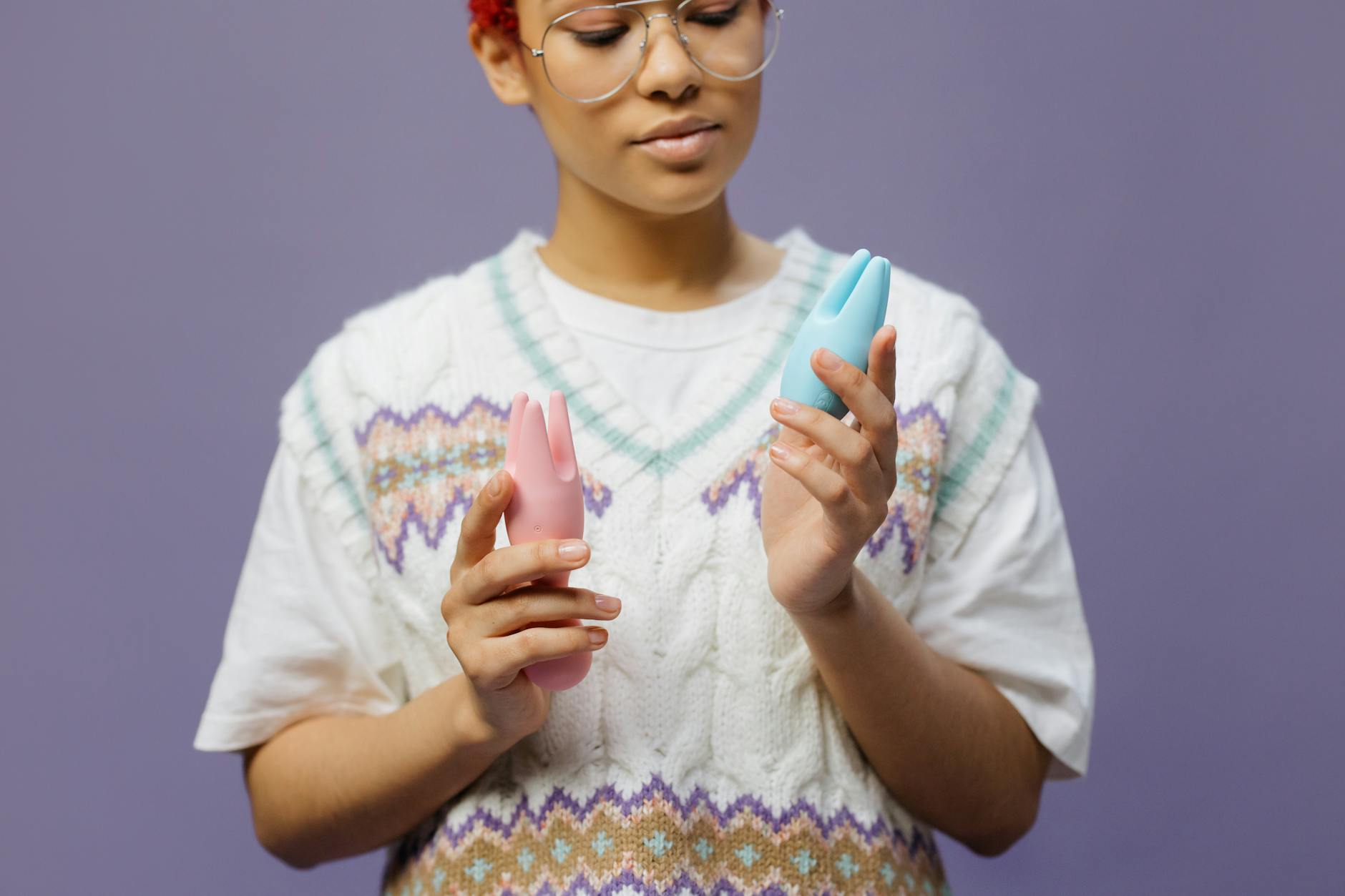
Here's the thing nobody tells you about pleasure
Your clitoris is not a static target. It shifts. Week one, a lemon vibrator might feel like a gentle hum. Week two, the same intensity can feel overwhelming. This isn't in your head, and it's not a problem. It's your cycle.
Hormones don't just control your mood and energy. They reshape your nervous system's sensitivity to touch, your blood flow, your tissue swelling, and how quickly your body builds arousal. If you've ever wondered why masturbation feels different on different weeks, or why your partner's touch lands differently, or why your favorite lemon clitoral vibrator suddenly feels too intense mid-cycle, this is exactly why.
I work with people navigating this all the time. The pattern is always the same. Someone buys a vibrator that feels perfect, then gets frustrated because it feels wrong on a random Tuesday. They assume something is broken. Usually, it's just their cycle.
How your cycle shapes clitoral sensation
Estrogen and testosterone orchestrate a four-week dance, and your clitoral tissue responds to every note.
During the follicular phase (days 1-14, roughly), estrogen rises. This does several things at once. Blood flow to the vulva increases, which causes natural swelling and engorgement. The clitoris becomes slightly engorged, which actually makes it more responsive. Your skin becomes more sensitive overall because estrogen increases nerve receptor density. The result? Many people experience heightened sensation and faster arousal during this window.
Then ovulation hits. There's a testosterone spike that fans the flames. This is when desire often peaks. Everything feels more intense. Your lemon vibrator might feel perfect at medium intensity here, whereas week one it needed to be on high.
After ovulation, the luteal phase begins (days 15-28). Progesterone rises. This hormone is a depressant (not a downer, just less stimulating than estrogen). Blood flow to the genitals decreases slightly. Swelling subsides. The clitoris becomes less engorged, which can make the same vibrator feel either dull or, paradoxically, too strong because your tissues are more tender. Progesterone also increases overall body sensitivity to pain, which means the line between pleasure and overstimulation gets narrower.
Right before your period, this effect intensifies. Many people find that direct clitoral contact feels uncomfortable during this window. The sensitivity is there, but it's more raw.
This cycle repeats every single month. And if you're paying close attention to how your body responds to your lemon vibrator, this is the invisible choreography underneath.
Why your favorite settings change week to week
Let's say you have a lemon sucker you love. You dial it to pattern 3 mid-cycle, and it's magic. Two weeks later, pattern 3 feels like an assault. You haven't changed. Your cycle has.
What's actually happening:
Weeks 1-2 (Follicular phase). Tissue is engorged, nerve endings are primed, blood flow is rich. Your lemon vibrator's suction and pulse patterns feel responsive. You might crave higher intensity. This is when many people discover new settings and new sensations.
Week 3 (Ovulation and early luteal). Peak sensitivity and desire. This is when your vibrator can feel almost too good. The intensity that felt perfect last week can now feel sharp. Many people dial back intensity slightly or shorten sessions because the stimulation builds so fast.
Week 4 (Late luteal, pre-period). Tissue is less engorged, progesterone is high, sensitivity is tender. Your lemon clitoral vibrator might feel less responsive (the engorgement that amplified sensation is gone), or paradoxically, every pattern might feel too intense because your tissues are more irritable. Some people shift to broader pressure rather than precise suction. Others take a break entirely.
This isn't dysfunction. This is your body doing exactly what it's supposed to do.
The practical layer: how to adjust
Once you understand the pattern, you have options.
Track your settings. Seriously. Most people never connect their vibrator preferences to their cycle until I ask them to track it. Spend three months notating which pattern, intensity, and duration felt best on which day. You'll see the pattern emerge like a relief map. Suddenly, week 3 intensity surprises stop happening.
Build a micro-rotation. You don't need five vibrators. But having two lemon adult toys with slightly different stimulation profiles (one with broad pressure, one with precision suction) lets you match your tool to your cycle needs. Many people keep a lemon vibrator for high-intensity weeks and something broader for tender weeks.
Adjust the approach, not just the tool. During low-sensation weeks, longer warm-up time often works better than diving straight into your favorite pattern. During high-sensitivity weeks, starting at lower intensity and building up slowly prevents that overwhelming feeling. The vibrator stays the same. Your protocol shifts.
Permission to stop. The week before your period, some bodies genuinely don't want direct clitoral stimulation. This is not a loss. It's information. If that's you, shifting to full-body touch, internal stimulation, or simply resting is completely valid.
The conversation with a partner
If you're with someone, cycle-aware pleasure changes the dynamic significantly.
Many people have a partner who has no idea their touch or approach needs to shift week to week. They bring the same intensity every time and get confused when sometimes it lands and sometimes it doesn't. Teaching your partner that your clitoral sensitivity genuinely changes throughout your cycle means they stop interpreting the shift as rejection and start understanding it as data.
The framing matters. "My body responds differently to intensity depending on my cycle" is a way more useful conversation than "sometimes it hurts." One invites curiosity and adaptation. The other triggers problem-solving mode and, often, unnecessary worry.
Your lemon vibrator is actually a useful reference point here. If your partner watches how your settings preferences shift across the month, they see the cycle pattern made visible. It's easier to understand cyclical sensitivity when there's a concrete tool reflecting it.
When cycle shifts feel like something else
Most cycle-related sensation changes are normal. But sometimes a shift signals something worth investigating.
If specific sensations suddenly feel painful mid-cycle (not tender, but sharp and wrong), or if arousal completely vanishes for weeks at a time, or if the pattern you track doesn't stabilize after three months, these are worth discussing with a doctor or a therapist. They could be signs of hormonal imbalance, pelvic floor tension, or sometimes just high stress (stress flattens hormonal fluctuations and can make the cycle feel unpredictable).
But the week-to-week variation in pleasure response? That's not a problem. It's your nervous system and your cycle in perfect conversation.
What this means for your pleasure practice
Your clitoral vibrator is not a failure if it feels different on different weeks. Your body is not a problem if what felt amazing on Tuesday feels wrong on Friday. This is how cycles work. The people who have the best long-term relationship with their lemon vibrators are the ones who treat it as a dynamic tool, not a static solution.
Your sensitivity is not inconsistent. It's just cyclical.
Once you understand that, you stop fighting your body and start dancing with it. And honestly? That's when the real pleasure begins.
People also ask
Why does my clitoral vibrator feel less effective during my period?
During menstruation, progesterone and estrogen dip, which means less blood flow to the vulva and less engorgement of clitoral tissue. The tissue is also more tender and irritable as the uterine lining sheds. Your lemon sucker might feel less responsive because there's less swelling to amplify sensation, and it might feel uncomfortable because your tissues are more sensitive to pressure. Some bodies genuinely don't want direct clitoral contact during their period. Others find that shifting to lower intensity or broader pressure works perfectly. It's not a malfunction. It's a cycle shift.
Can I use a lemon vibrator the same way every day?
Technically, yes. You can use your clitoral vibrator daily if you want. But the experience won't feel the same each day because your cycle is constantly shifting hormone levels and tissue responsiveness. Many people find that matching their practice to their cycle (higher intensity mid-cycle, lower intensity during the luteal phase) makes pleasure feel more consistent and satisfying. You can absolutely stick to one approach, but tracking how it feels across your cycle might reveal why some days feel better than others.
Does hormonal birth control change how vibrators feel?
Yes. Hormonal birth control (pills, patches, rings, implants) suppresses the natural cycle. This means your clitoral sensitivity, arousal pattern, and pleasure response stay relatively flat across the month instead of fluctuating. Many people on hormonal birth control report that their lemon vibrator feels consistent week to week, which some find easier to work with. Others miss the heightened sensation of ovulation and find that their overall desire dips. If you're on hormonal birth control and your pleasure feels muted, that's a real effect. It might be worth discussing with a doctor whether a different formulation would help.
Is it normal for my sensitivity to feel painful sometimes?
Tenderness mid-cycle or during menstruation is common. Sharpness or burning is less common and worth checking out with a doctor. Pelvic floor tension, vulvodynia, and vulvovaginal atrophy can all create pain sensations that shift with your cycle. A good gynecologist can help distinguish between normal cycle-related tenderness and something that needs treatment. Your lemon clitoral vibrator shouldn't cause ongoing pain. If it does consistently during certain weeks, that's information worth bringing to a healthcare provider.
How do I know if my cycle sensitivity changes are normal?
Normal cycle sensitivity changes are predictable and follow a pattern. You notice the same shift at the same point in your cycle, month after month. It's uncomfortable sometimes but not painful. It doesn't interfere with daily function. If you're tracking, you see a clear rhythm. If your sensitivity shifts are unpredictable, painful, or disruptive, those warrant a conversation with a healthcare provider. But the week-to-week variation in how your lemon vibrator feels? That's almost always just your cycle doing its job.
Should I use a different vibrator during different cycle phases?
You don't have to. Many people do just fine with one lemon vibrator and simply adjust the intensity and duration based on how their body is responding. Others prefer having two tools with different stimulation profiles (one precise, one broad) so they can match the tool to the week. There's no right answer. What matters is that you're paying attention to how your body responds and giving yourself permission to adjust your approach across your cycle. Read more about matching vibrators to your sensitivity type.
The bottom line
Your clitoral sensitivity doesn't stay constant. It pulses with your cycle. Understanding this pattern means you stop blaming yourself or your vibrator for shifts that are actually just your body doing its job. Your lemon vibrator isn't flawed. You're not broken. You're just cyclical. And once you work with that instead of fighting it, pleasure becomes a lot less confusing and a lot more satisfying.
Resources and further reading
If you want to go deeper on how hormones shape pleasure and sensitivity, the resources that have shaped this piece include research on cycle-related changes in genital sensation, clinical literature on progesterone's effect on pain perception, and conversations with hundreds of people tracking their own patterns. For a practical guide to using any vibrator with awareness of your cycle, check out our beginner guide to lemon vibrators. And if you're navigating this with a partner, this piece on using lemon vibrators with a partner might spark some useful conversations.