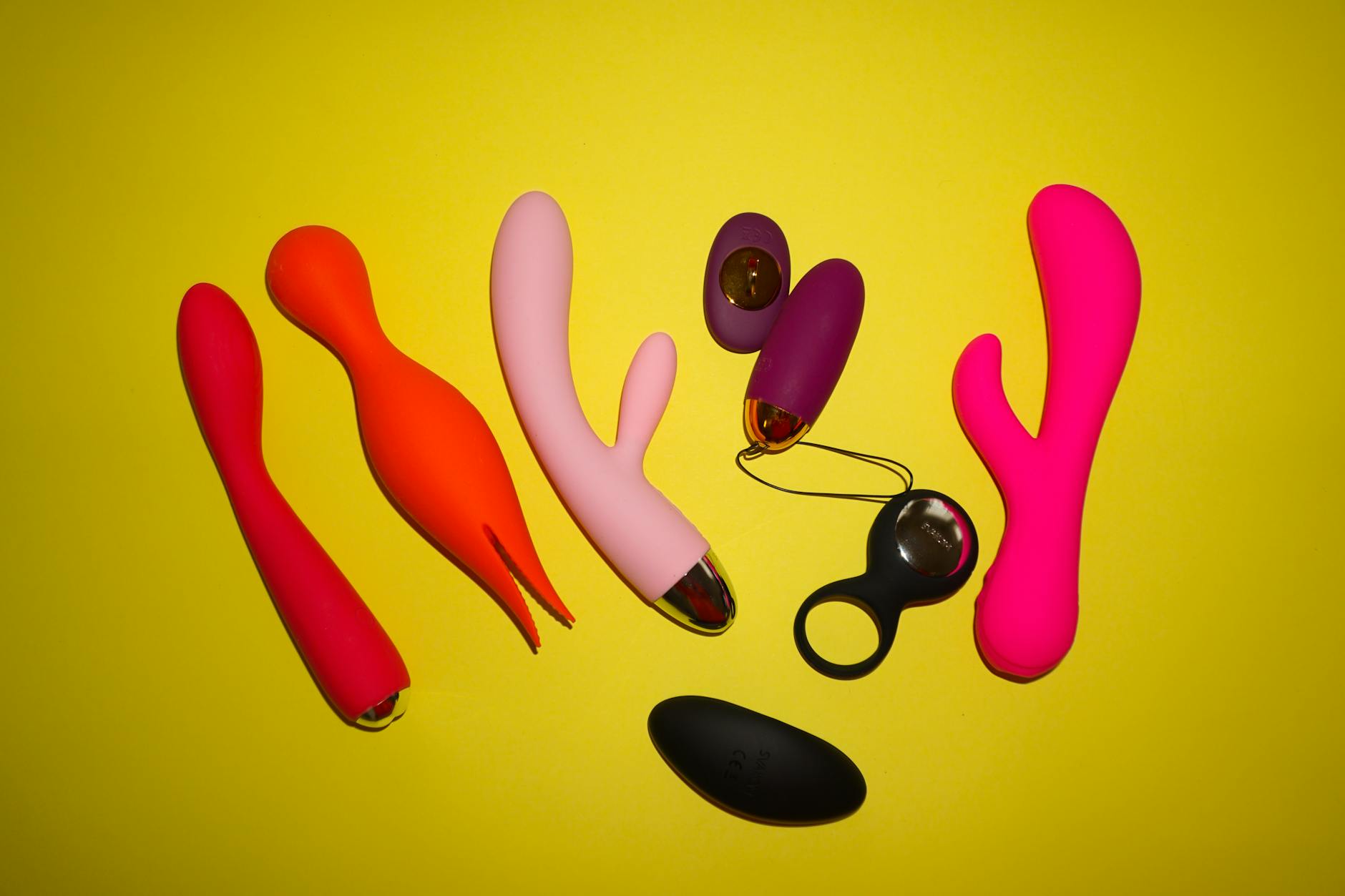
Let's name what's actually happening
You want to have solo pleasure. You've carved out time. Maybe you've even bought a lemon vibrator because you've heard they work well. And then your brain starts doing laps. Not about what feels good, but about whether you're doing it right, whether you're taking too long, whether someone will find out, whether you should be doing something more productive.
That voice isn't weakness. It's anxiety, and it's one of the most common pleasure blockers I see in my practice. The good news? It's also one of the most fixable.
Why anxiety kills sensation (and what's really going on)
Anxiety narrows your window of tolerance. Your nervous system gets stuck between fight-or-flight and shutdown. When that happens, blood flow pulls away from your genitals and into your limbs and core. Your clitoris doesn't swell the way it needs to. Your vagina doesn't lubricate properly. Even if you're holding a lemon clitoral vibrator, your body can't access what it's designed to feel.
Plus, the mental load is relentless. Guilt about taking time for yourself. Intrusive thoughts about work, family obligations, your body, whether you're "normal." A part of your brain is narrating the whole experience instead of being present in it.
The irony is that solo pleasure is supposed to be the low-pressure version of sex. No performance, no partner to worry about, just you and sensation. Except anxiety rewrites that contract.
The pre-session reset (do this before you even touch yourself)
I don't mean meditation in the stereotypical sense. I mean three concrete things that shift your nervous system state before you start.
First, kill the time pressure. Set a timer for 20 minutes, then put your phone in another room. Not just face-down. Actually gone. When you know you have a real boundary and you're not going to suddenly remember that email you need to send, your brain can actually relax. If 20 minutes passes and you're not feeling it, you stop. No failure, no "I should have gone longer." You did the work.
Second, make the space feel intentional. Dim the lights. Lock the door. Light a candle if that helps you feel like this time is consecrated and not stolen. The goal is to create a physical signal to your nervous system that "now is different from the rest of the day." Your brain needs to know this isn't rushed.
Third, name what you're feeling without judgment. Before you start, say out loud: "I'm nervous about this" or "My mind is crowded right now." Not to fix it, just to acknowledge it. The moment you name a feeling instead of trying to ignore it, you've already taken some of its power. You're not broken because you feel anxious. You're human.
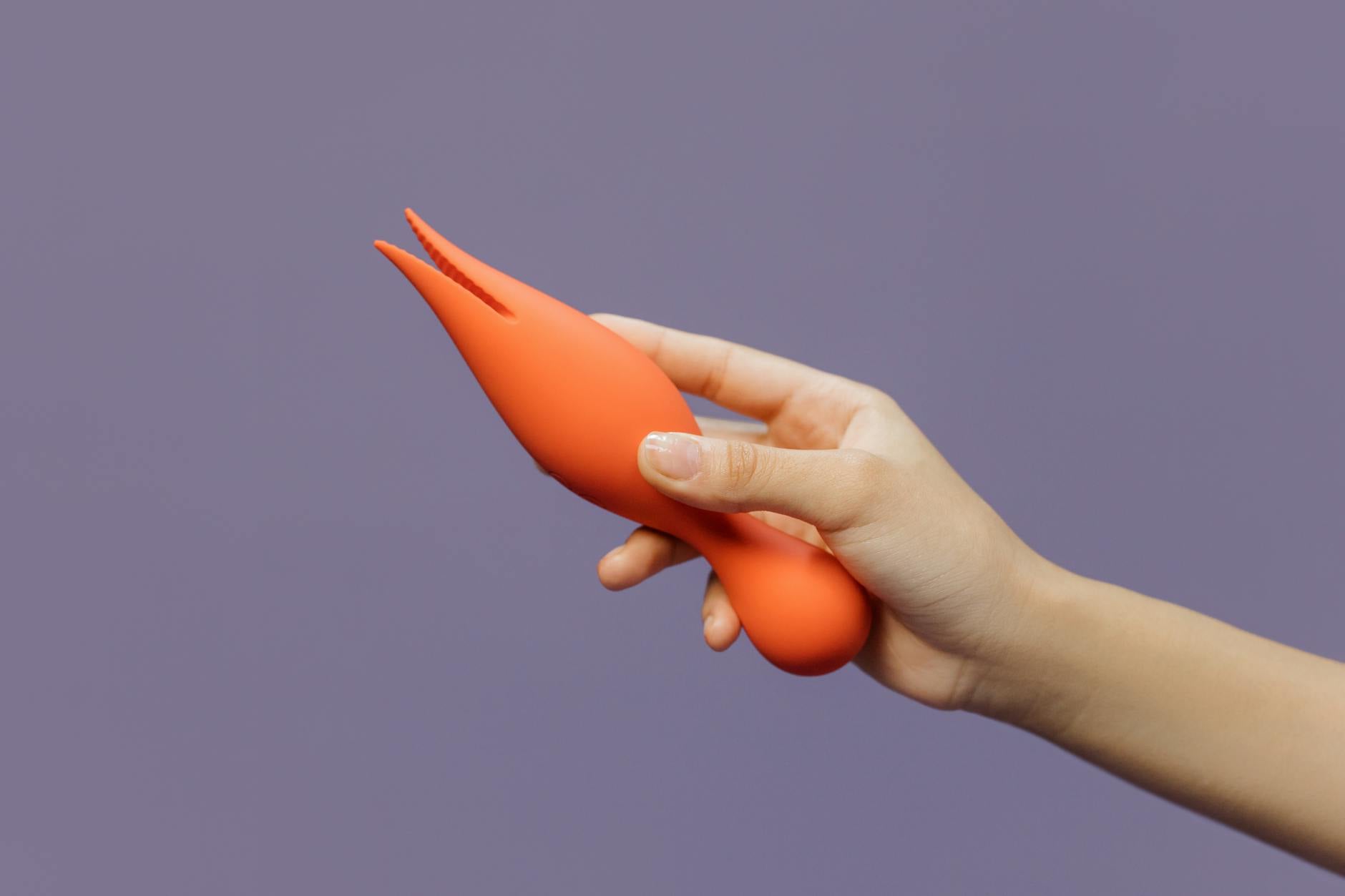
Photo by cottonbro studio on Pexels
Use your lemon vibrator as a focus tool, not a goal
This is the shift that matters. Most people use a vibrator thinking the goal is to come as fast as possible. Wrong framework. When you're anxious, you need the vibrator to be your anchor to the present moment, not your achievement metric.
Start on the lowest setting. Hold the Lem or whichever lemon clitoral vibrator you have against your vulva, but don't press hard. Let it sit there. Notice the vibration. Notice the texture. Notice whether the sensation feels sharp, dull, warm, cold. You're collecting data about what you're actually feeling right now, not chasing an outcome.
If your mind drifts to a worry or a to-do, that's not a failure. That's the time to anchor back. "Okay, I'm thinking about tomorrow. Now I'm feeling vibration on my left labia. Now I'm noticing a gentle warmth." The vibrator becomes your reason to come back to your body instead of staying in your head.
Many people find that when they stop trying to have an orgasm, orgasms actually happen. But the real win is feeling sensation, not the orgasm itself. If you come, great. If you don't, you've still interrupted the anxiety loop and remembered what your body is capable of. That matters.
The breathing piece (yes, really)
I'm going to give you one breathing pattern that works specifically for anxiety-blocked pleasure. Inhale for four counts through your nose. Hold for four. Exhale for six through your mouth. The longer exhale signals your vagus nerve that you're safe.
Do this for 10 cycles before you start. Then while you're using your lemon vibrator, come back to it whenever you notice your shoulders tensing or your jaw clenching. Those are signs your nervous system is back in threat mode. One or two cycles of long exhales and you'll feel the shift.
You don't have to keep doing it the entire time. But having it as a reset button is powerful.
When intrusive thoughts won't stop (and you're doing it right)
Some people have a clean, quiet mind during solo pleasure. That's great. If you're not one of those people, know that anxious thoughts during self-touch are so common that I'd say most of my clients deal with them.
Intrusive thoughts don't mean you're broken. They don't mean you need to stop. They mean you probably grew up in an environment where your pleasure wasn't centered, where you were taught to prioritize other people's comfort over your own, or where sex carried shame.
That's a rewrite, not a reboot. Every time you stay with your lemon vibrator and your breath despite the anxious voice, you're rebuilding the neural pathway that says "my pleasure matters." It won't happen in one session. But over weeks, you'll notice the anxious voice gets quieter because you've proven to yourself, over and over, that solo pleasure is safe.
The role of a partner (if you have one)
If you're partnered and your anxiety is partly about them knowing or discovering that you masturbate, that's a separate conversation worth having. Not during sex. When you're both neutral and clothed.
Something like: "I've been feeling awkward about having solo time. I want to make space for that without it being weird between us." Many partners are actually relieved to hear it, especially if they've been worried you weren't satisfied with them. It often opens the door to better communication about what actually turns you both on.
But if that conversation doesn't happen, or if your partner isn't supportive, your solo pleasure is still yours. It's not selfish. It's maintenance.
When to bring a lemon vibrator in (timing matters)
If you're brand new to using a lemon clitoral vibrator and you're anxious, don't start with the vibrator. Start with your hands. Spend 3-4 sessions just touching yourself, building comfort, remembering what sensation feels like without the extra variable of a toy.
Once you've done that and your nervous system is a bit more settled, then introduce the vibrator on the lowest setting. Let it be an addition, not a replacement. Some people find that holding the vibrator in one hand while touching themselves with the other helps. You get the sensory input from both, which paradoxically makes it easier to stay grounded.
If you're using a lemon sucker or air-suction style clitoral vibrator for the first time, the sensation is different from traditional vibration. It might feel unusual. That's okay. Unusual isn't bad. Unusual just means you need a few tries to decide if you like it. Don't expect to have a response the first time.
FAQ: Your questions, straight answers
Is it normal to feel guilty about solo pleasure?
Yes, and it's usually rooted in cultural or religious messaging you absorbed early. Guilt is learned, which means you can unlearn it. Every time you practice solo pleasure without apologizing for it internally, you're deprogramming that guilt. It takes time, but it works.
What if I can't relax no matter what I do?
Try a different environment. Some people can't relax in the bedroom because it's where they sleep or where they feel watched. Try a shower, a locked bathroom, even your car parked somewhere safe and private. Sometimes location changes everything.
Should I use fantasies to help with anxiety?
Fantasies can help anchor your mind in something other than anxiety. If fantasies work for you, absolutely use them. If they make things weirder or add pressure, skip them. Solo pleasure doesn't require a narrative.
How long should a solo pleasure session take?
Whatever time frame doesn't feel rushed. If you're setting 20 minutes and spending the whole time watching the clock, that's too short. If you're going for an hour and getting bored at 15 minutes, that's too long. The right duration is the one where you can actually relax.
Can anxiety about solo pleasure affect partnered sex?
Absolutely. If you don't feel safe with yourself, that safety doesn't magically appear with a partner. Working through solo pleasure anxiety helps you bring a grounded, present version of yourself to partnered sex too. It's foundational.
What if I'm worried about being too loud or someone hearing me?
That's a real logistical problem, not an anxiety problem. Use your lemon vibrator when you have actual privacy. Earplugs or music can help mask sound. And if you live with people who would judge you for masturbating, that's a boundary worth enforcing. Your body isn't shameful.
The real shift
Anxiety during solo pleasure usually isn't about the vibrator or the technique. It's about not believing you deserve uninterrupted time for sensation. About somewhere deep down feeling like pleasure is something you should earn or something that's not quite okay.
Every time you sit down with a lemon clitoral vibrator and stay present despite the anxiety, you're making a small act of resistance. You're saying your pleasure is worth protecting. You're proving to yourself that you can feel good and that's allowed.
Start small. Be patient. Check out how to use lemon vibrators when you feel pressure to perform for complementary strategies if performance anxiety is also in the picture. And if you're working through deeper shame around sexuality, that's therapy work, not toy work. Both have a place.
Your solo pleasure matters. Your nervous system can learn to trust that. It just takes practice.
Questions? Reach out anytime.